Aluminum Lactate Mordant for Cellulose Fibers to Natural Plant Dye - Yarn Plant Fibre Dyeing Printing
from $8.99
Priced and sold by 1, 2 or 4oz.
Aluminum lactate is a fairly new mordant for cellulose/plant fibers.
Aluminum lactate is completely soluble at room temperature. Aluminum lactate can be used to replace aluminum acetate, but if using either for cellulose/plant fibers like cotton, it is recommended for better color and lightfastness, to use a pre-treatment of tannins on the fibers.
Aluminum lactate is usually used at 4-15% WOF (weight of fiber) that you are dyeing.
Aluminum lactate is used in the same way as Aluminum Acetate (cellulose/plant fiber mordant). Aluminum Acetate is a great cellulose/plant fiber mordant, but I do not sell it because it is an extremely lightweight powder that just wants to fly into the air no matter how carefully I tried to deal with it. Aluminum Acetate is a very 'safe' mordant to use, but I deal with so many dusty things and just didn't want to be constantly dealing with such a dusty product, because getting anything in the lungs constantly is not a good idea! So, I don't sell it, just so that I don't have to constantly be weighing it out. That is the only reason.
So, Aluminum lactate is a new mordant that is less dusty to work with than Aluminum Acetate but can be used in exactly the same way. Aluminum lactate is manufactured from sustainable, natural sources and made from the by-products of the sugar industry, and maize and starch. Aluminum lactate dissolves better in water than Aluminum Acetate, so, I thought, yay! A versatile mordant that is less dusty! Let's try it!
If using Aluminum lactate to mordant plant fibers, make sure to scour your plant fiber material well with soda ash, before mordanting. Also, a pre-treatment of tannins will increase the lightfastness of the dye and yield better color than using aluminum lactate or aluminum acetate alone.
Pre-treat 100 grams of fiber with 10 grams of a tannin source (gallnut, myrobalin, sumac or any other tannin), by dissolving the tannin in boiling water and adding you fiber.
You may leave that sit for a few hours or overnight. Then, take 10 grams of aluminum lactate or aluminum acetate and dissolve that in a dye pot with some boiling water. Add your wetted fiber and fill the pot with hot water. There is no need to heat the pot additionally. The heat from the water is enough to mordant the fibers. You can leave this to cool for a few hours or over night.
Then just rinse the fibers when you take them out of the pot to rinse off any unattached mordant. You can dye with the fibers immediately.
So, use 10 grams of tannin and 10 grams of Aluminum lactate to dye 100 grams of cellulose fiber.
PIH
Priced and sold by 1, 2 or 4oz.
Aluminum lactate is a fairly new mordant for cellulose/plant fibers.
Aluminum lactate is completely soluble at room temperature. Aluminum lactate can be used to replace aluminum acetate, but if using either for cellulose/plant fibers like cotton, it is recommended for better color and lightfastness, to use a pre-treatment of tannins on the fibers.
Aluminum lactate is usually used at 4-15% WOF (weight of fiber) that you are dyeing.
Aluminum lactate is used in the same way as Aluminum Acetate (cellulose/plant fiber mordant). Aluminum Acetate is a great cellulose/plant fiber mordant, but I do not sell it because it is an extremely lightweight powder that just wants to fly into the air no matter how carefully I tried to deal with it. Aluminum Acetate is a very 'safe' mordant to use, but I deal with so many dusty things and just didn't want to be constantly dealing with such a dusty product, because getting anything in the lungs constantly is not a good idea! So, I don't sell it, just so that I don't have to constantly be weighing it out. That is the only reason.
So, Aluminum lactate is a new mordant that is less dusty to work with than Aluminum Acetate but can be used in exactly the same way. Aluminum lactate is manufactured from sustainable, natural sources and made from the by-products of the sugar industry, and maize and starch. Aluminum lactate dissolves better in water than Aluminum Acetate, so, I thought, yay! A versatile mordant that is less dusty! Let's try it!
If using Aluminum lactate to mordant plant fibers, make sure to scour your plant fiber material well with soda ash, before mordanting. Also, a pre-treatment of tannins will increase the lightfastness of the dye and yield better color than using aluminum lactate or aluminum acetate alone.
Pre-treat 100 grams of fiber with 10 grams of a tannin source (gallnut, myrobalin, sumac or any other tannin), by dissolving the tannin in boiling water and adding you fiber.
You may leave that sit for a few hours or overnight. Then, take 10 grams of aluminum lactate or aluminum acetate and dissolve that in a dye pot with some boiling water. Add your wetted fiber and fill the pot with hot water. There is no need to heat the pot additionally. The heat from the water is enough to mordant the fibers. You can leave this to cool for a few hours or over night.
Then just rinse the fibers when you take them out of the pot to rinse off any unattached mordant. You can dye with the fibers immediately.
So, use 10 grams of tannin and 10 grams of Aluminum lactate to dye 100 grams of cellulose fiber.

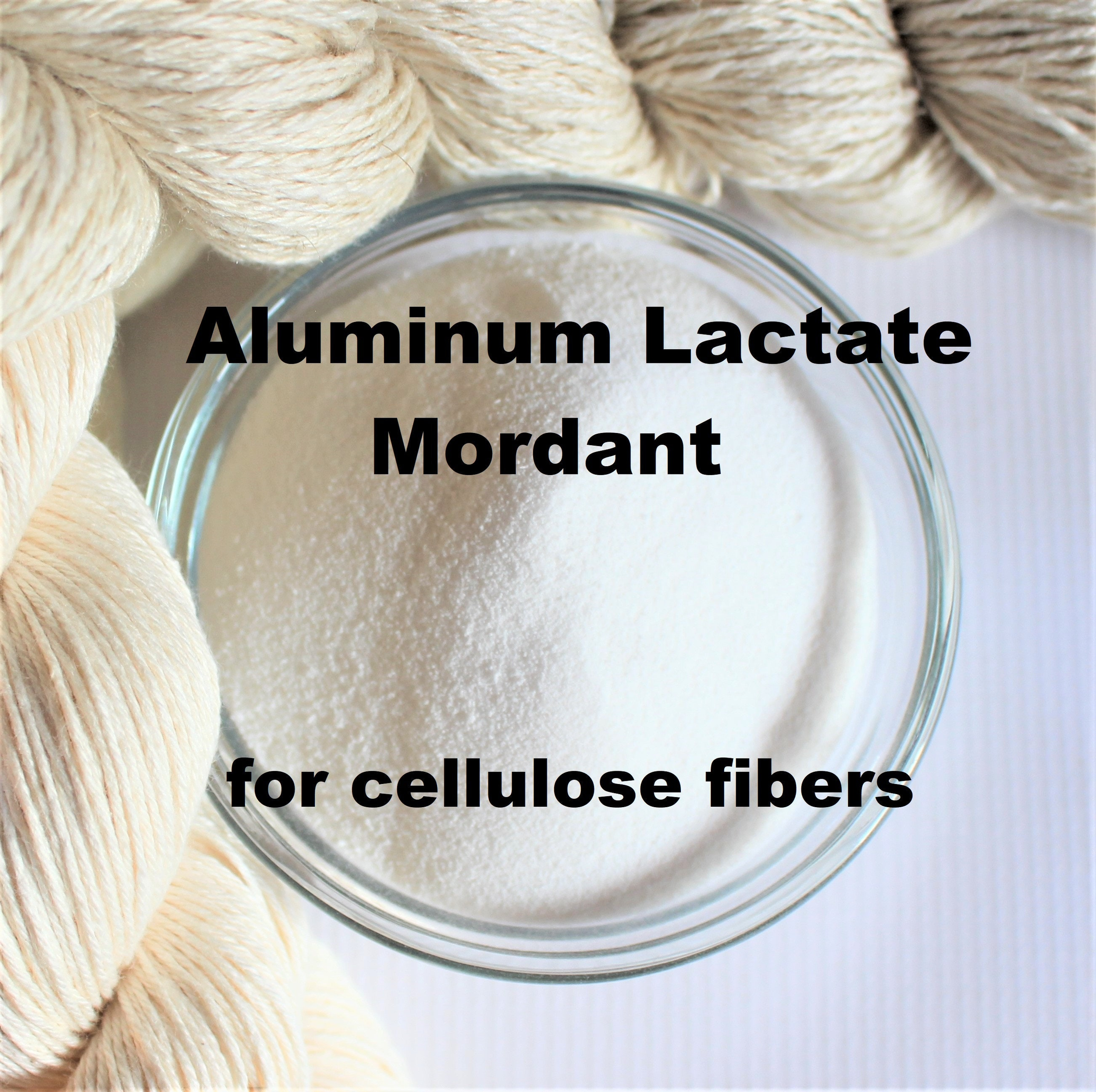 Image 1 of 4
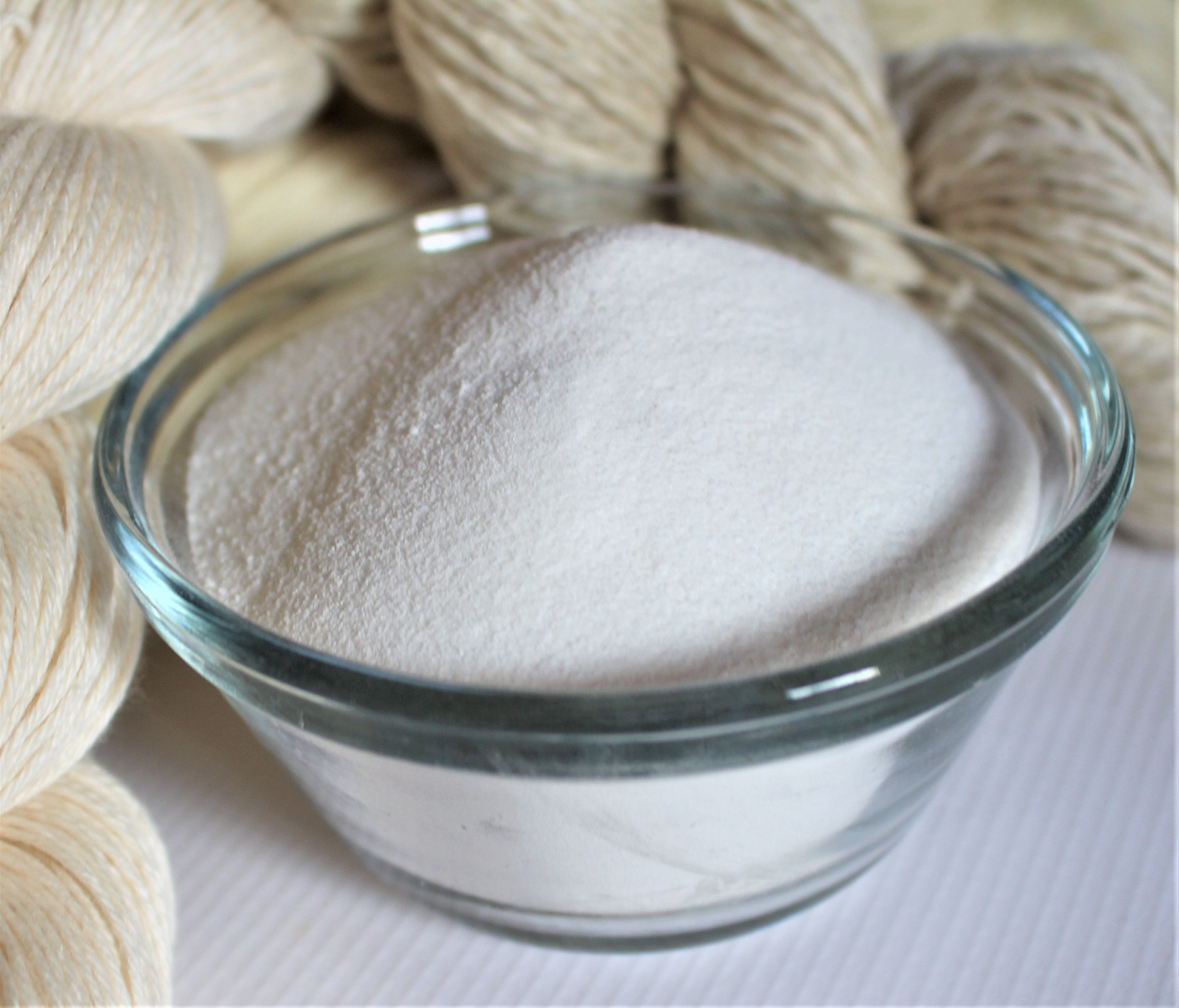 Image 2 of 4
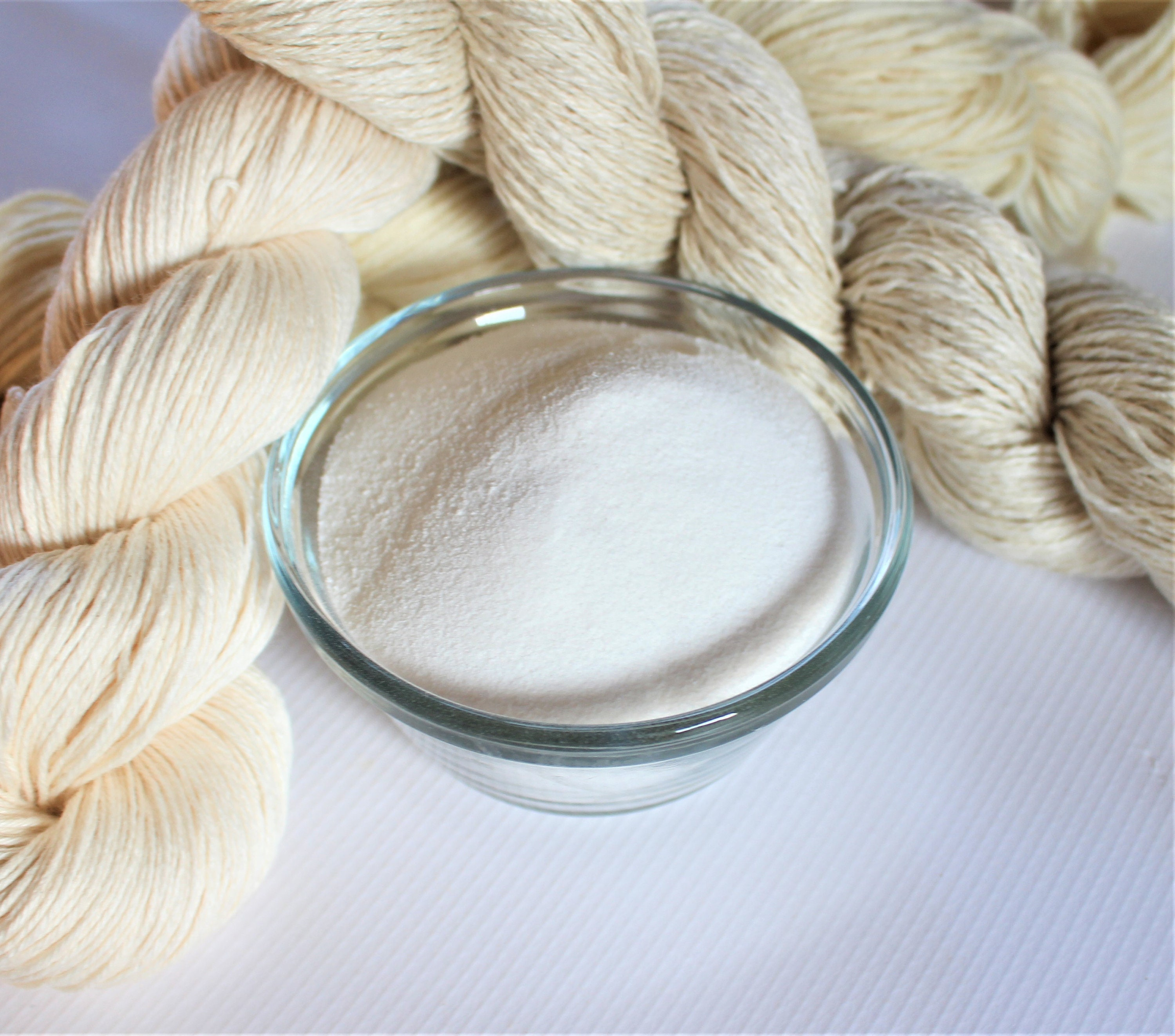 Image 3 of 4
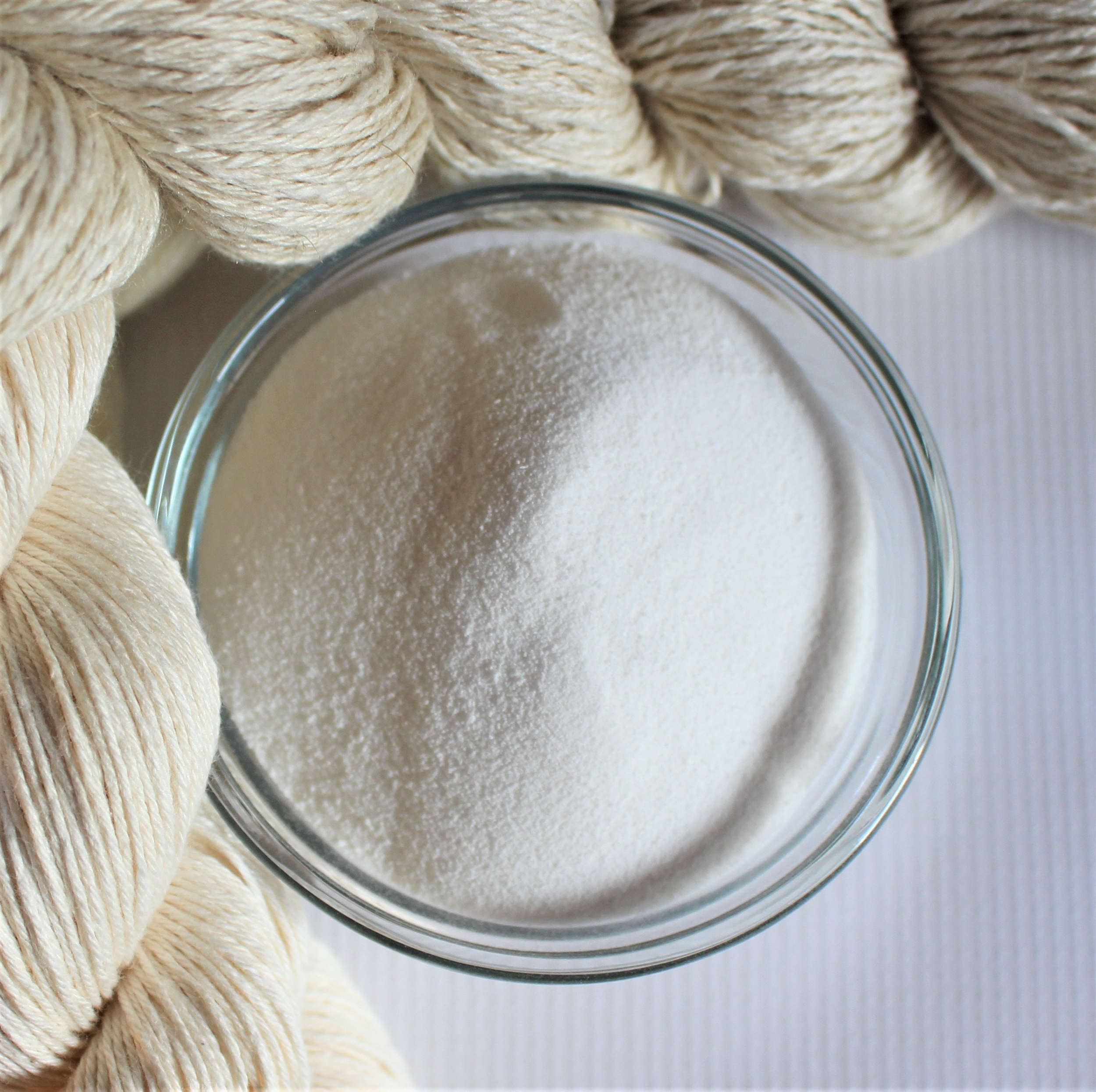 Image 4 of 4