Black Walnut Hull 4, 8oz Dried Whole Natural Plant Dye for Yarn Protein Cellulose Dyes Earth Friendly Fiber Wool Brown
from $8.99
Priced and sold by 4oz or 8oz.
These dried black walnut husks are from the many black walnut trees that grow around our property. I have picked and dried them myself. Black walnuts give tan to dark brown color easily, and blacks when overdyed with indigo.
The black walnut tree is a native tree of eastern North America. The husk produces a brown dye that is a direct dye (substantive dye), which does not need a mordant to be used with it when dyeing protein fibers. Black Walnut can dye protein fibers without the use of any mordant.
Black walnuts contain juglone and tannins, and a mordant should be used when using black walnut to dye cellulose fibers.
Black walnuts are a strong dye source and 20-25% WOF (weight of fiber to be dyed) will give light shades, 50% WOF will give medium shades and 100% WOF will give dark shades of brown. Give the dye bath and the fibers to be dyed, plenty of time in the dye bath if you want to achieve the darkest shades.
On regular, non-superwash wool, you are likely to only receive a tan color from black walnuts. The dark brown yarn in the photos is superwash wool yarn. Superwash wool takes acid or natural dyes more deeply, and so you will get a darker, deeper color if you use superwash wool instead of regular wool. Black walnut is a substantive dye and does not need a mordant to help it dye fibers, but you will likely get a darker color if you mordant the fiber before dyeing with black walnut.
I pick and dry the shells of the black walnuts while they are still green. The dye components degrade some as the shell of the walnuts rot and turn brown, so I remove the shells off the walnuts while they are still green and fresh and dry them as quickly as possible.
I will include an information sheet on dyeing with black walnut.
I ship all my products as quickly as possible.
Priced and sold by 4oz or 8oz.
These dried black walnut husks are from the many black walnut trees that grow around our property. I have picked and dried them myself. Black walnuts give tan to dark brown color easily, and blacks when overdyed with indigo.
The black walnut tree is a native tree of eastern North America. The husk produces a brown dye that is a direct dye (substantive dye), which does not need a mordant to be used with it when dyeing protein fibers. Black Walnut can dye protein fibers without the use of any mordant.
Black walnuts contain juglone and tannins, and a mordant should be used when using black walnut to dye cellulose fibers.
Black walnuts are a strong dye source and 20-25% WOF (weight of fiber to be dyed) will give light shades, 50% WOF will give medium shades and 100% WOF will give dark shades of brown. Give the dye bath and the fibers to be dyed, plenty of time in the dye bath if you want to achieve the darkest shades.
On regular, non-superwash wool, you are likely to only receive a tan color from black walnuts. The dark brown yarn in the photos is superwash wool yarn. Superwash wool takes acid or natural dyes more deeply, and so you will get a darker, deeper color if you use superwash wool instead of regular wool. Black walnut is a substantive dye and does not need a mordant to help it dye fibers, but you will likely get a darker color if you mordant the fiber before dyeing with black walnut.
I pick and dry the shells of the black walnuts while they are still green. The dye components degrade some as the shell of the walnuts rot and turn brown, so I remove the shells off the walnuts while they are still green and fresh and dry them as quickly as possible.
I will include an information sheet on dyeing with black walnut.

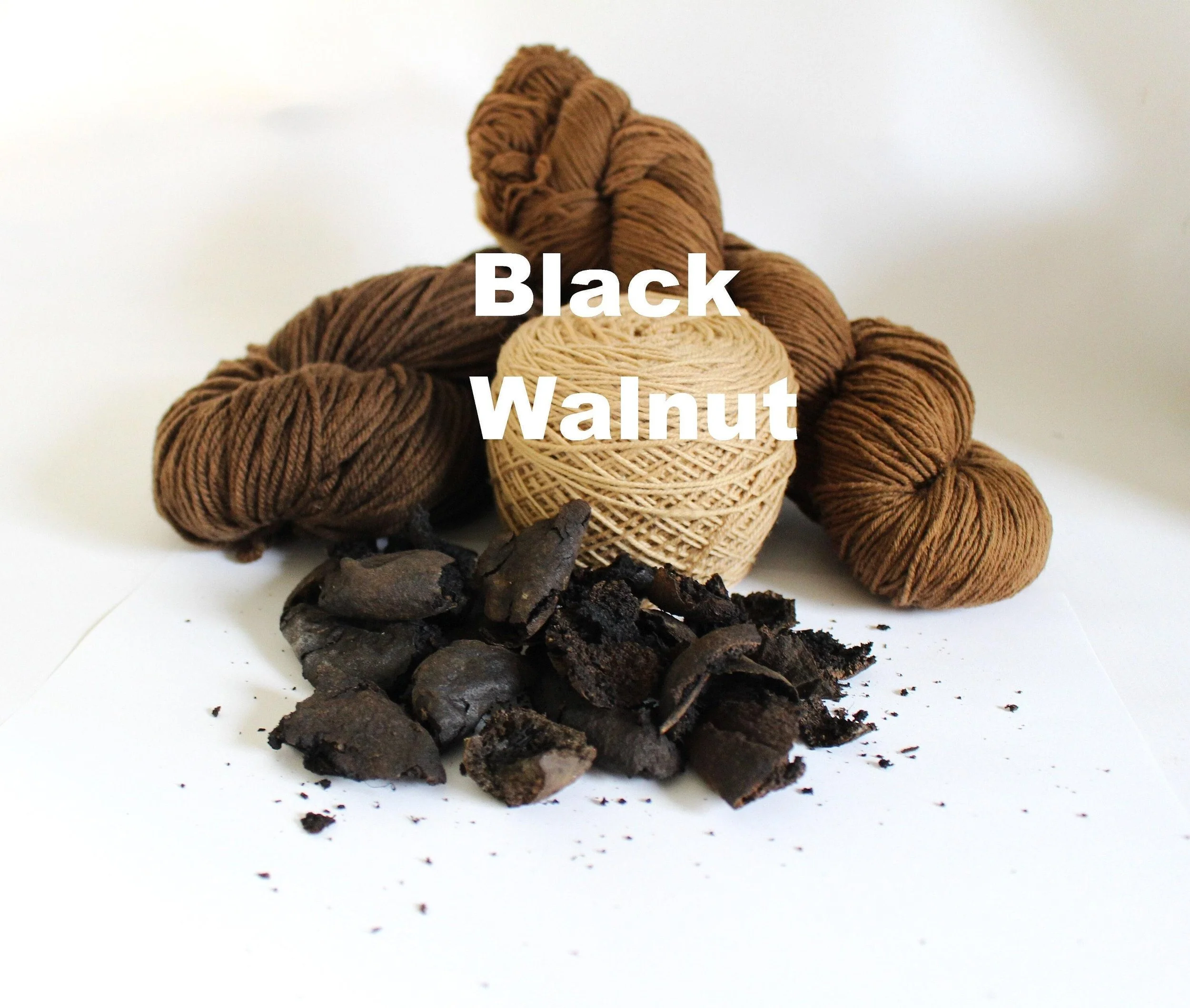 Image 1 of 5
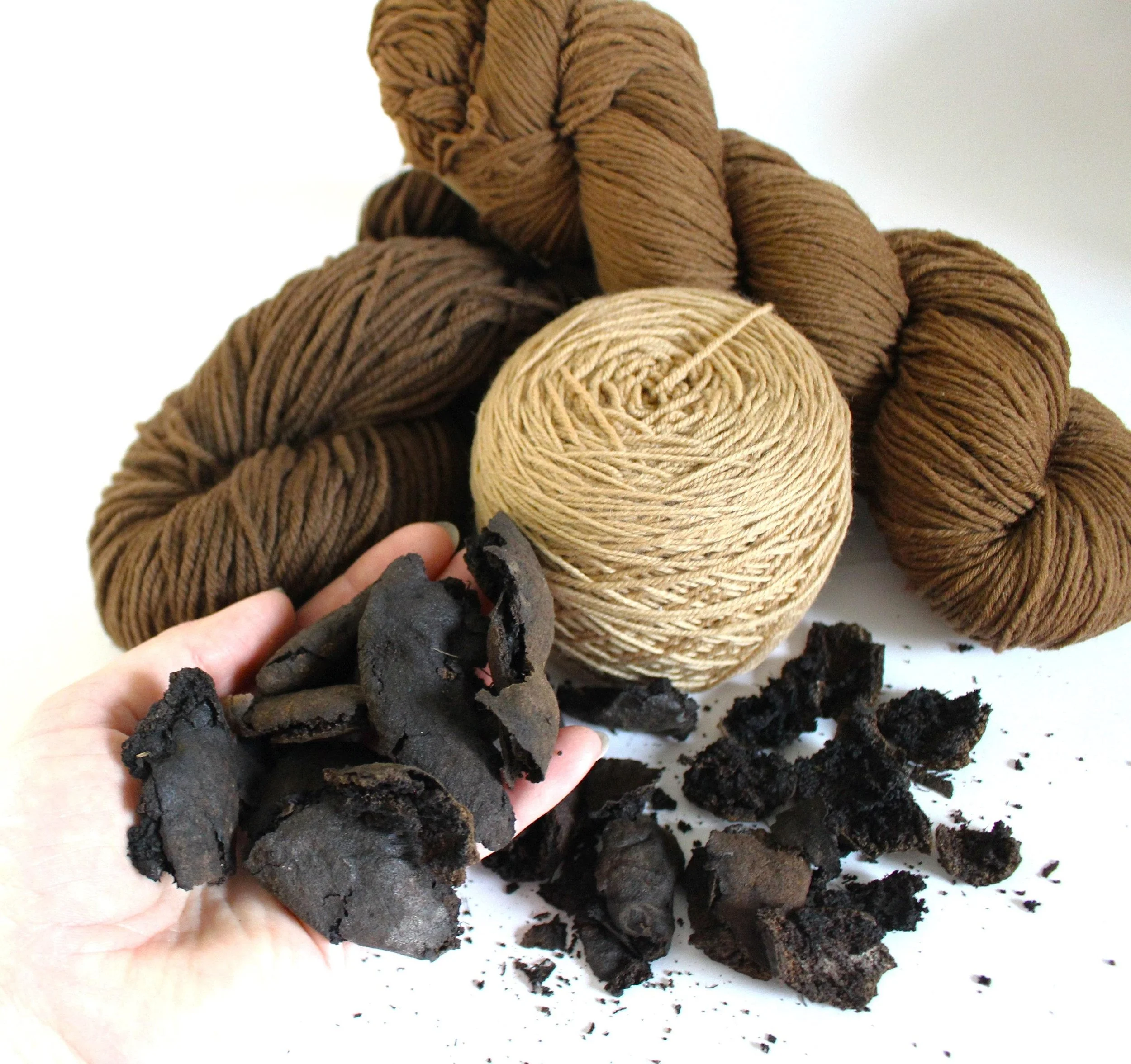 Image 2 of 5
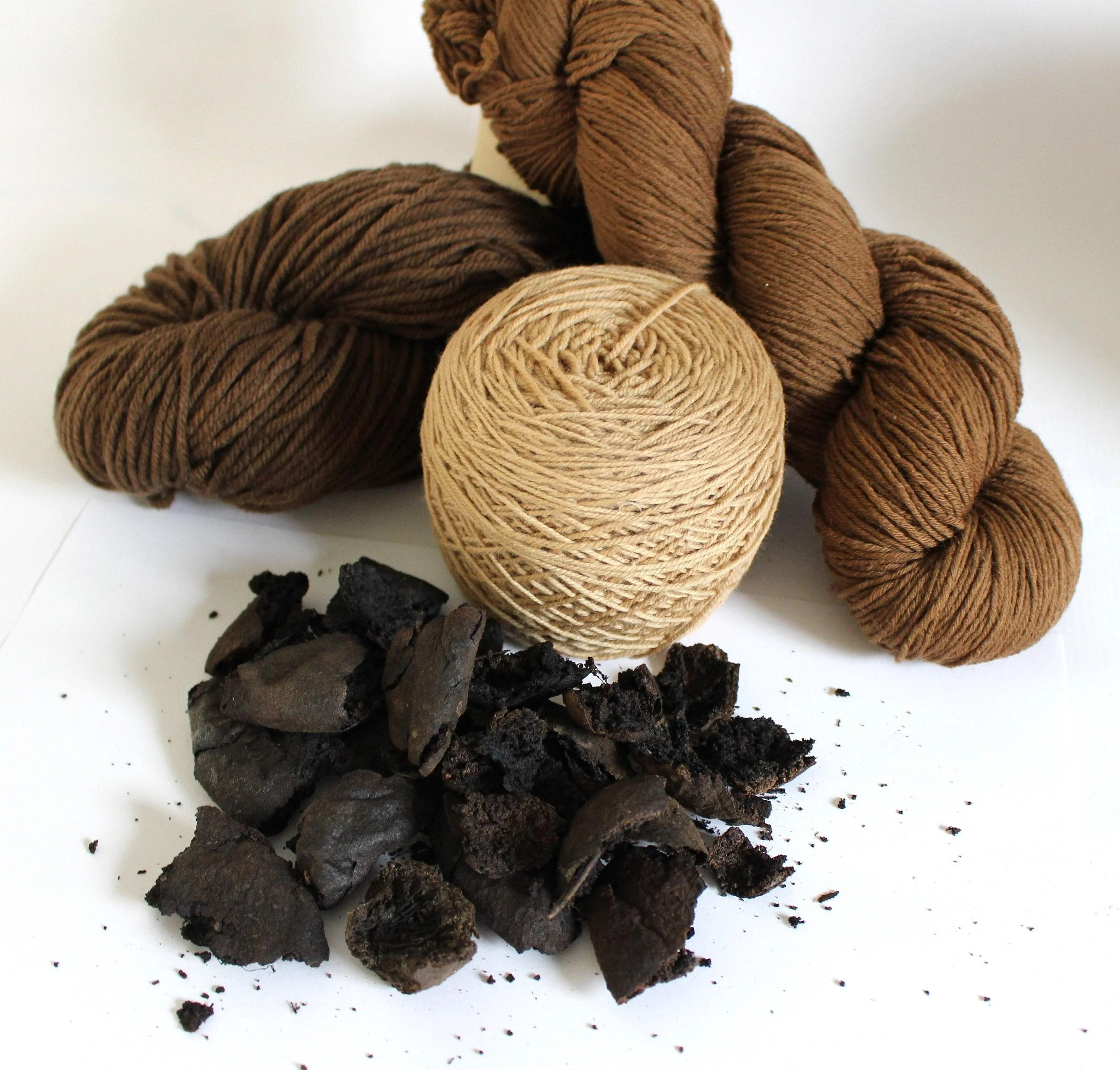 Image 3 of 5
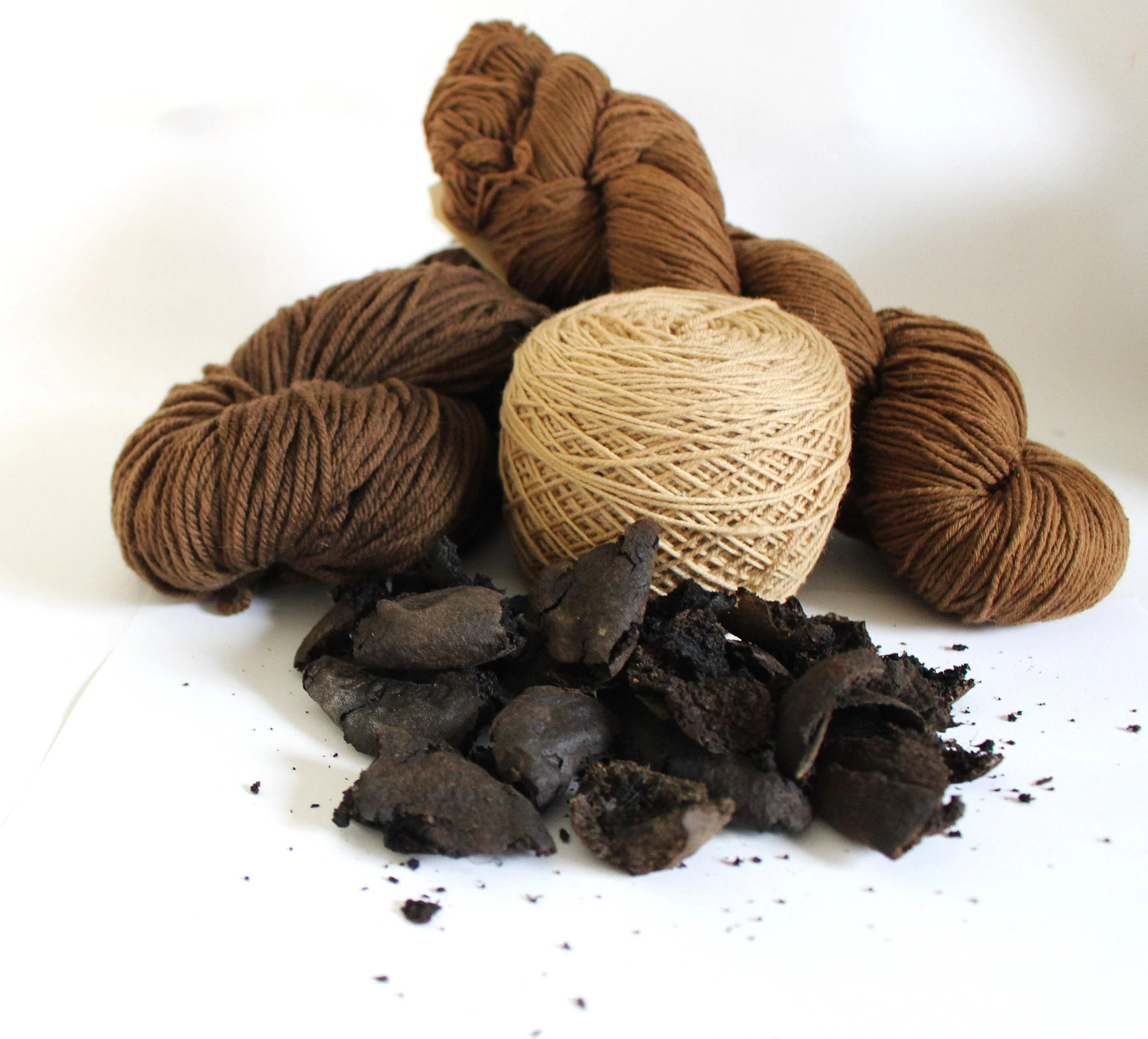 Image 4 of 5
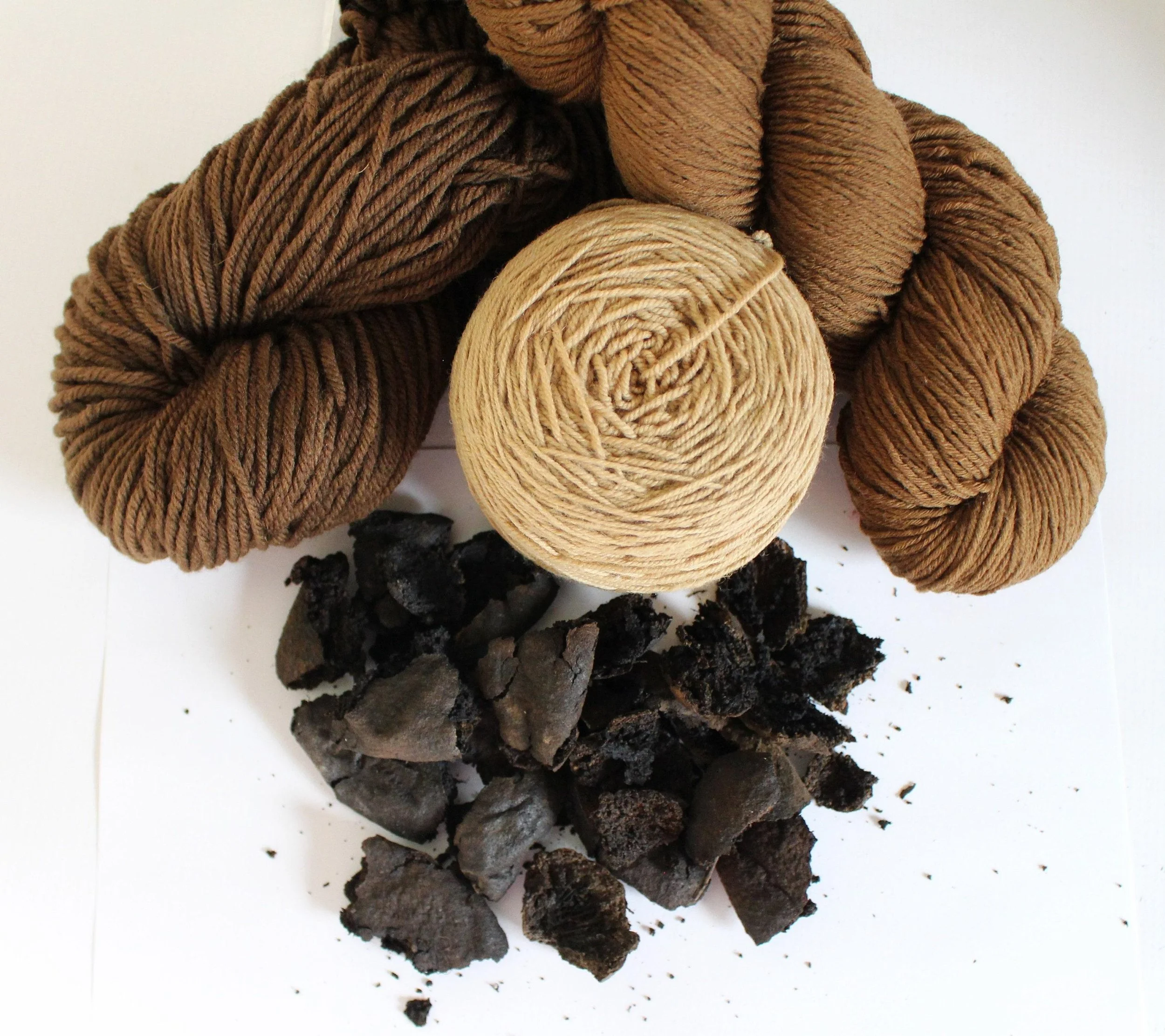 Image 5 of 5