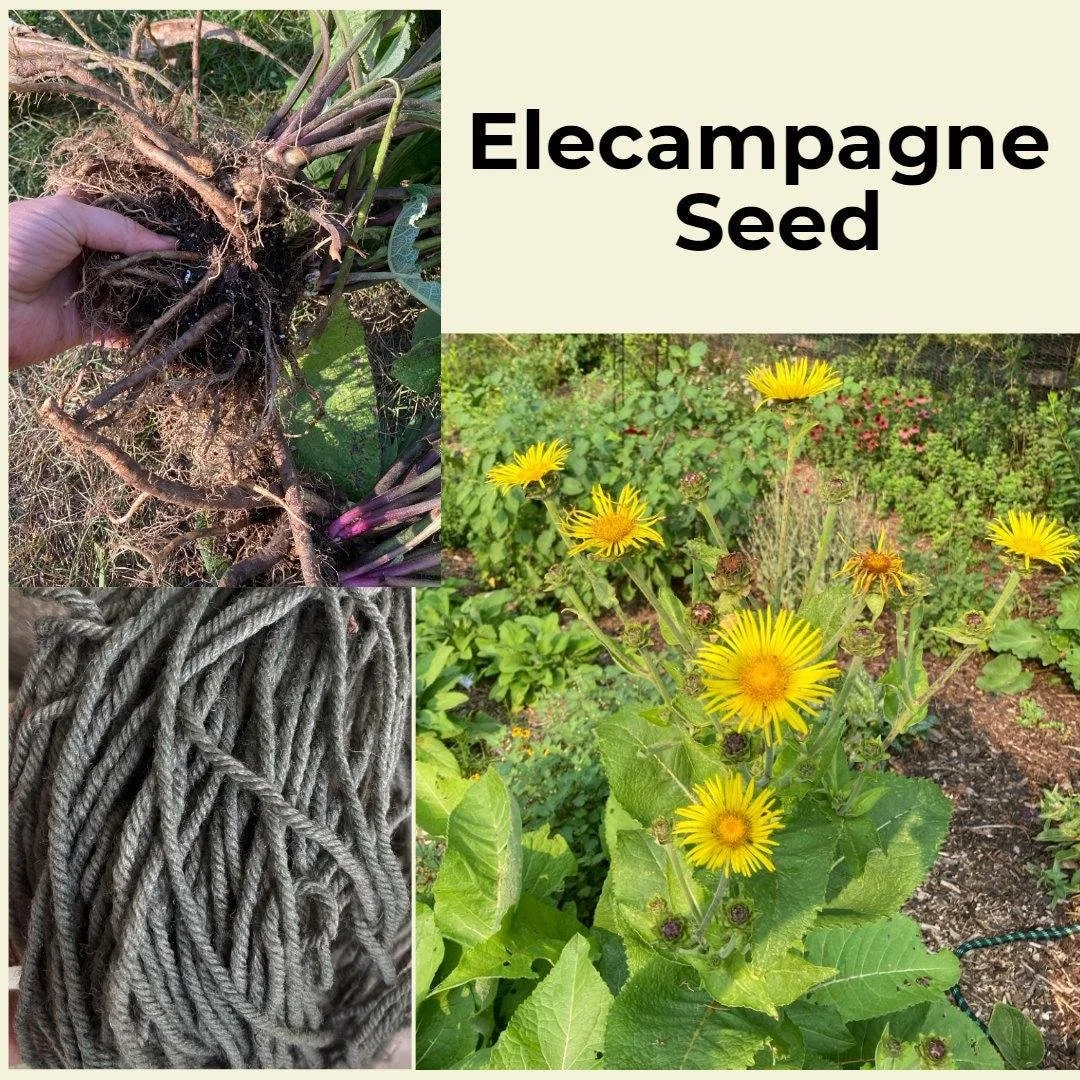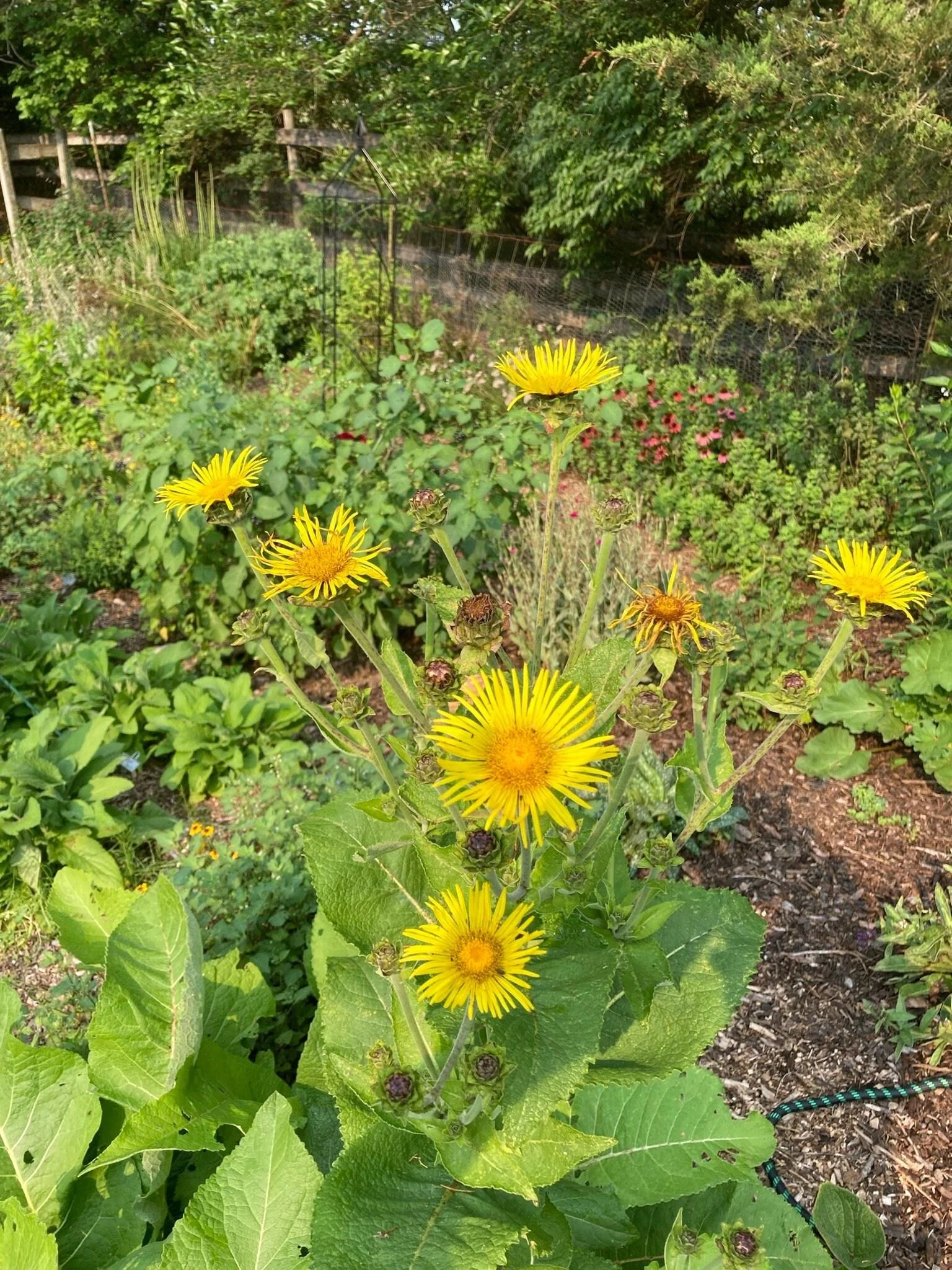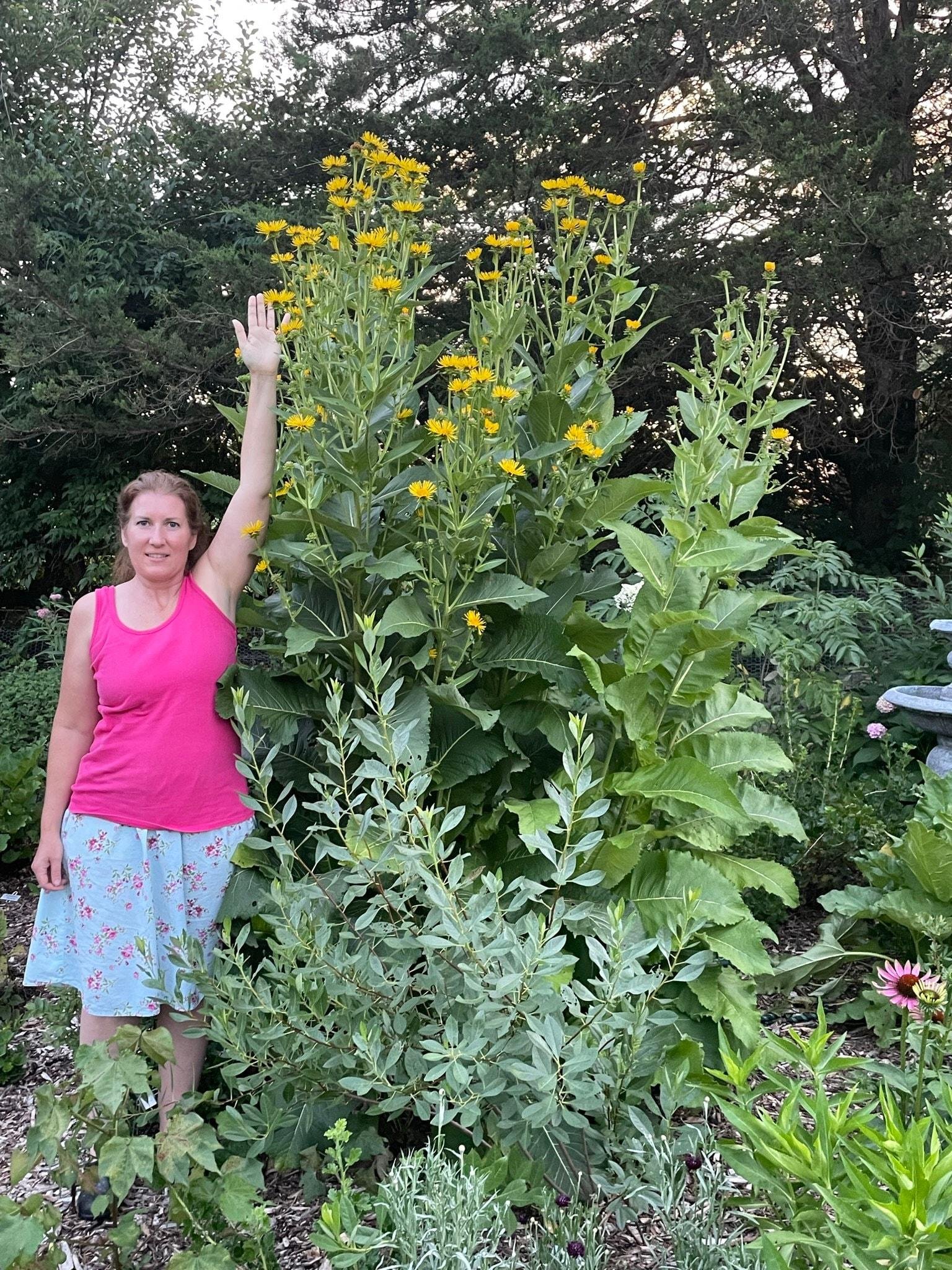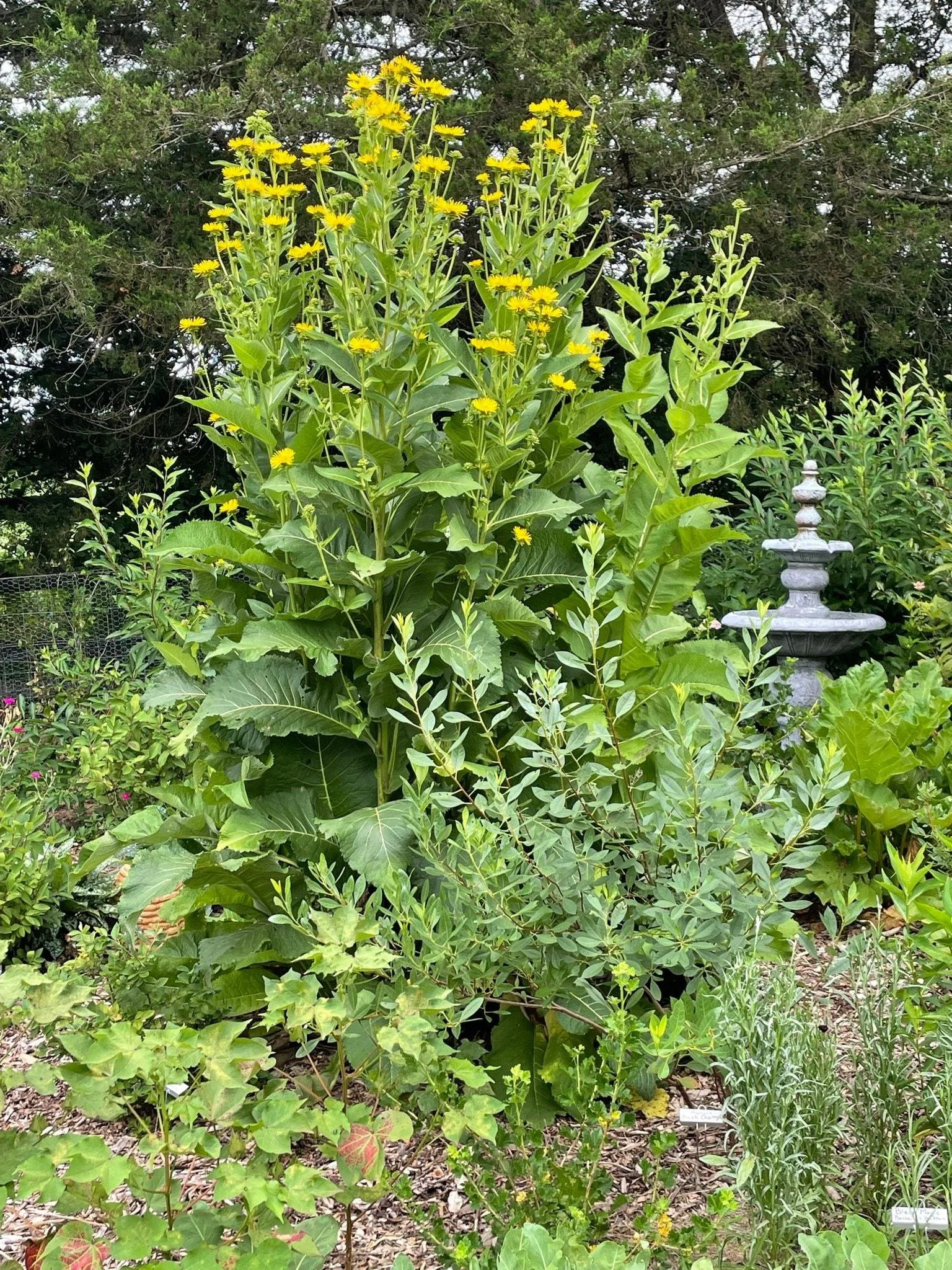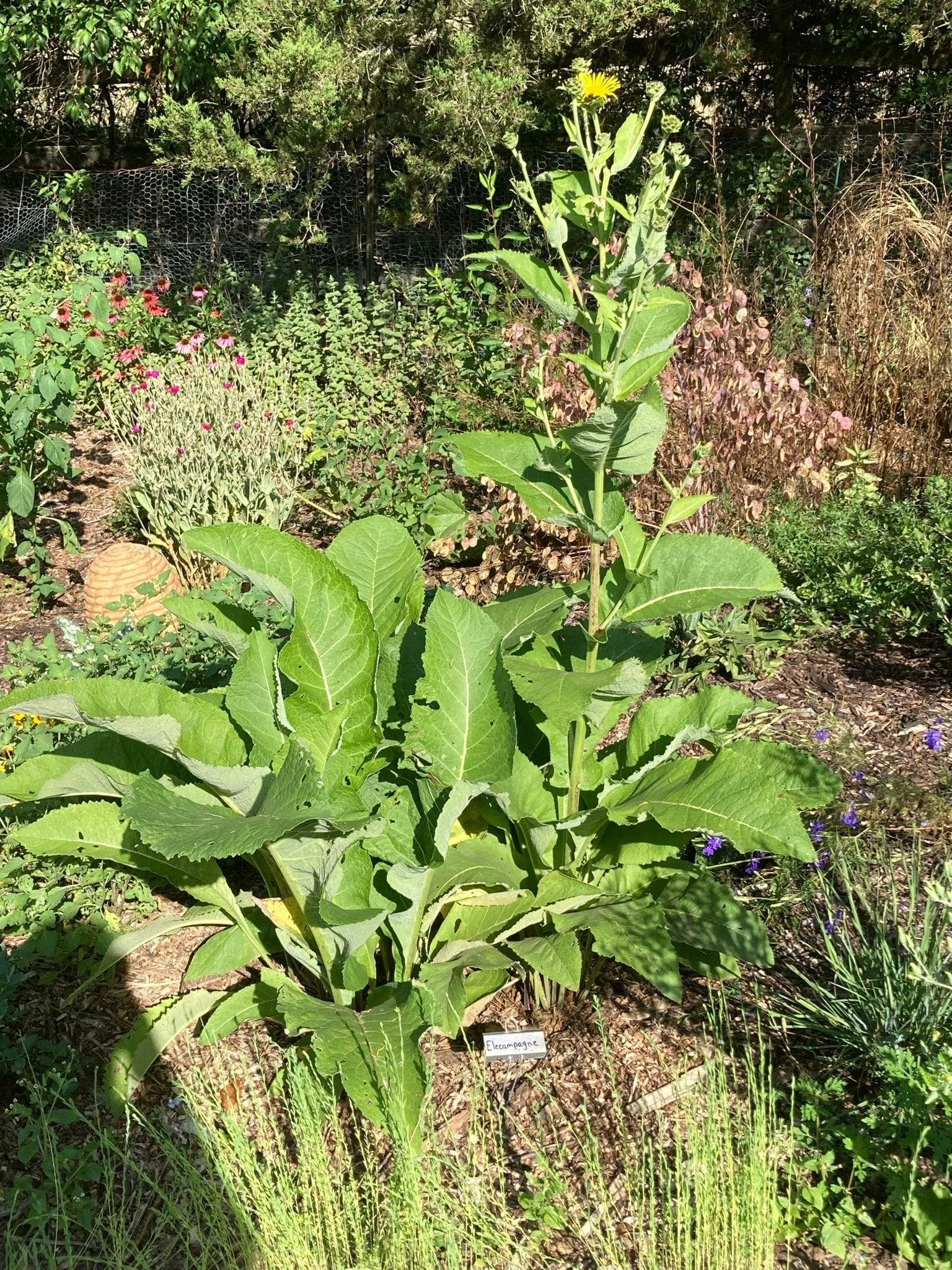
Elecampagne, Inula helenium, seeds grown and harvested here in my gardens.
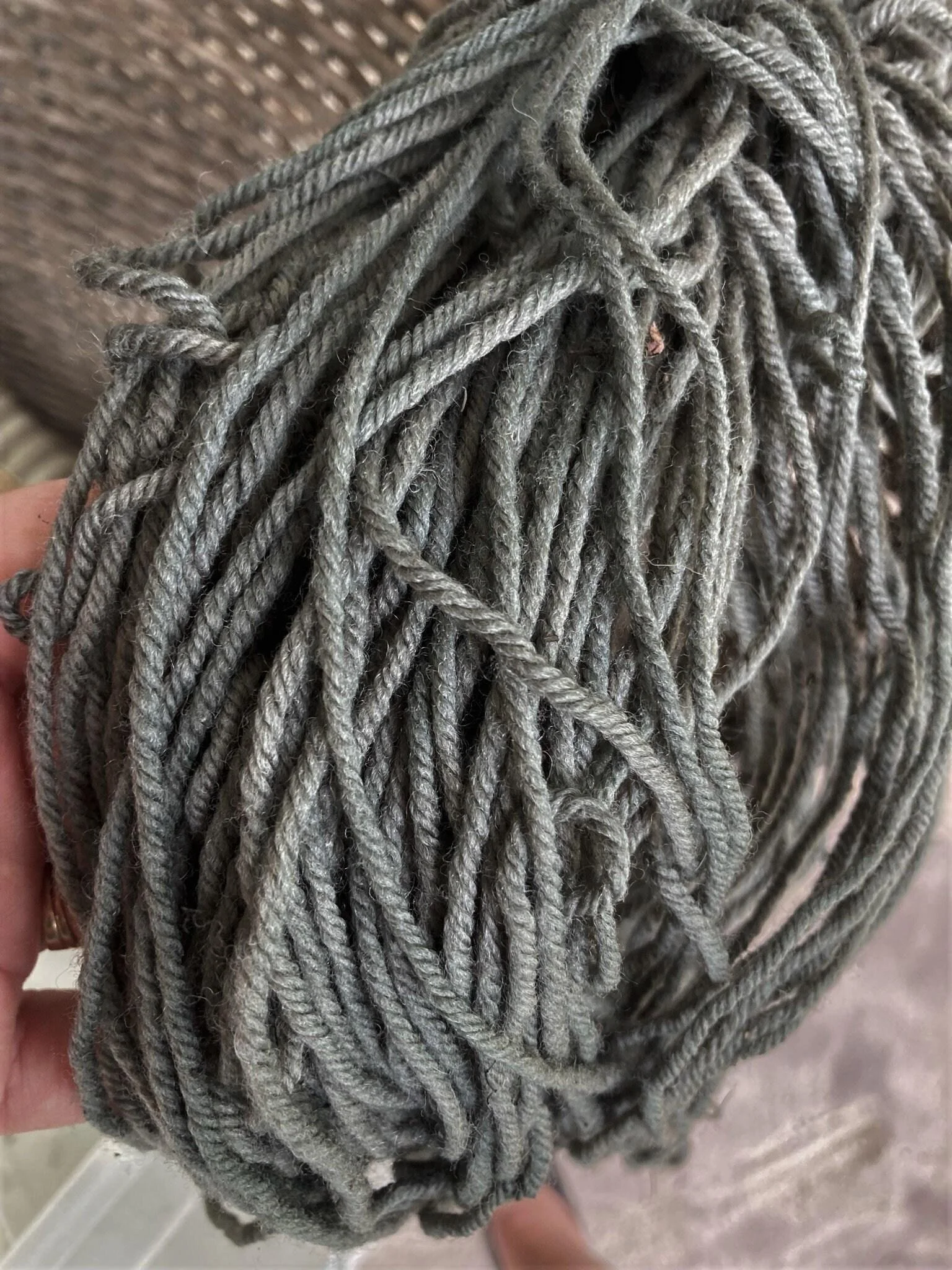
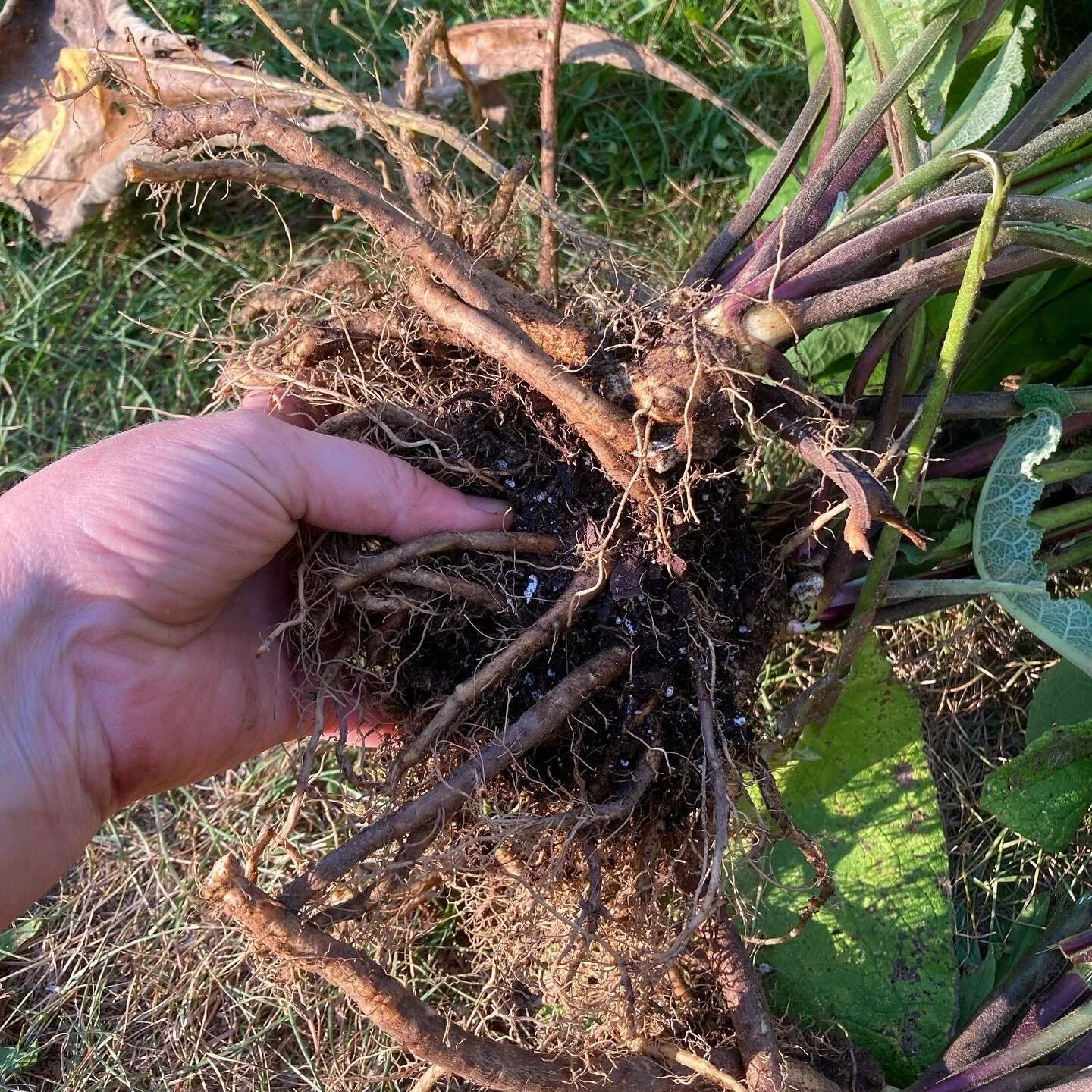
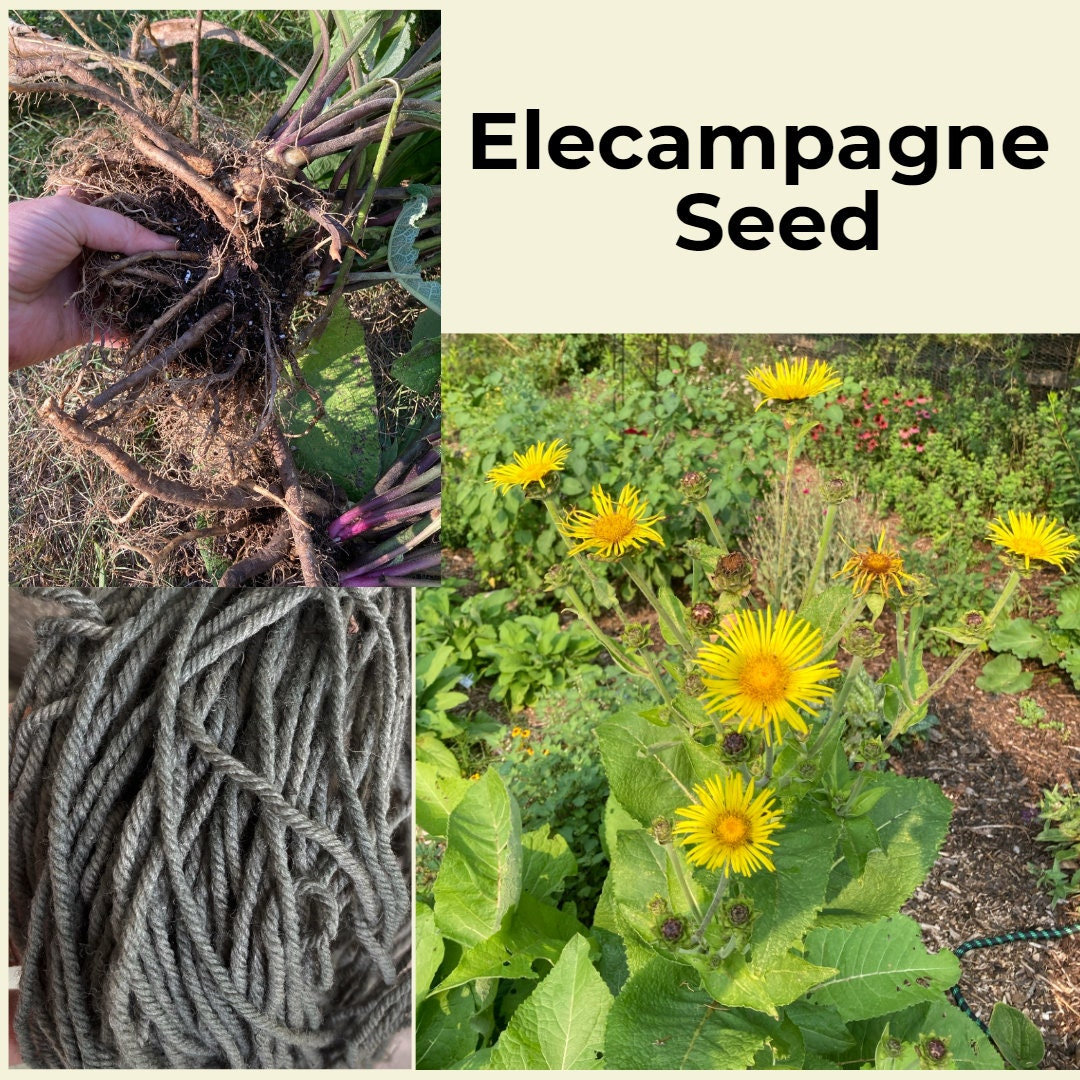
Elecampagne is a very hardy perennial plant. Its roots are used as an herb and as a dye. I found that the roots are quite aromatic! They smelled like they should be a base of a men's cologne and were still fragrant after boiling! You can see the rich gray color I got from boiling the roots with superwash Merino wool yarn.
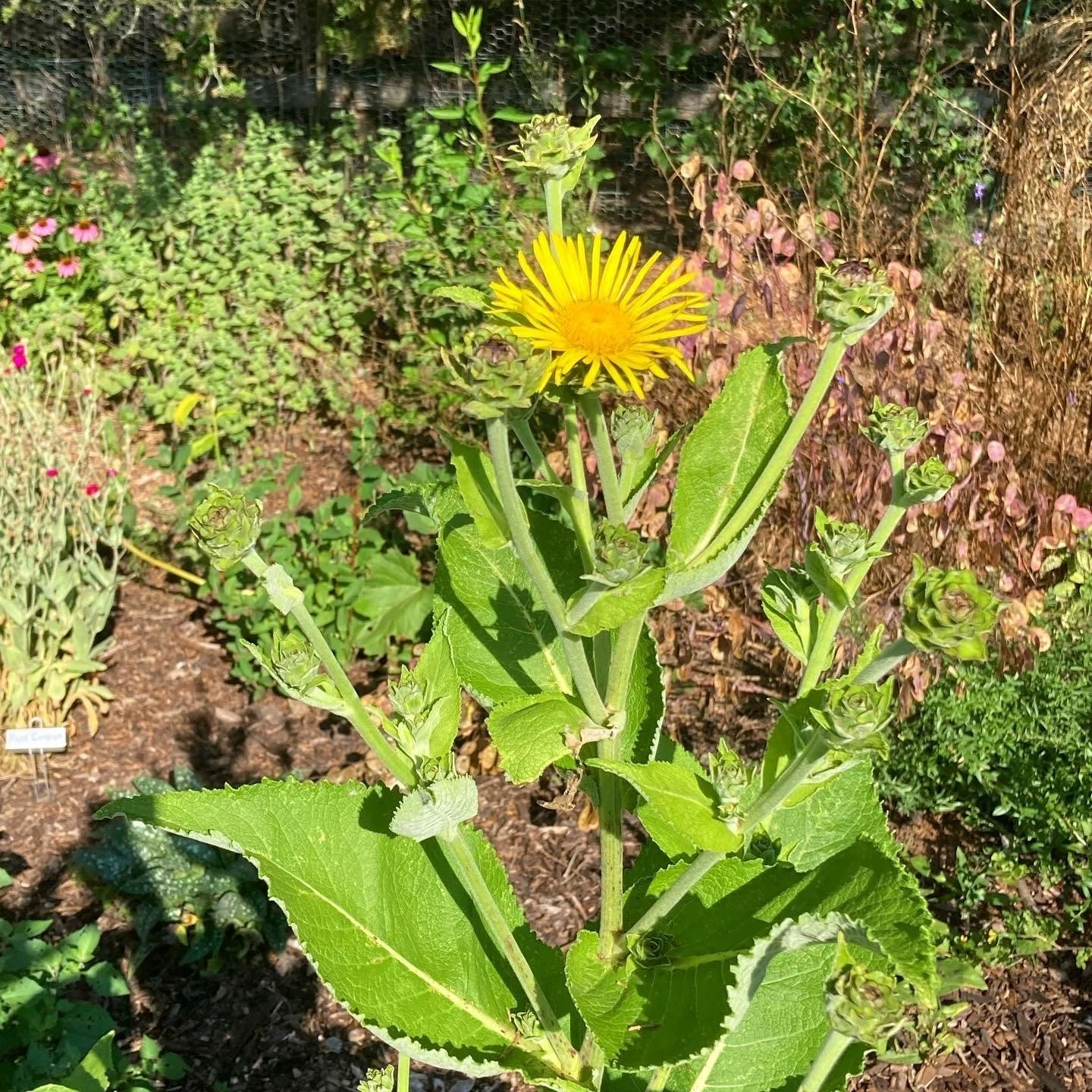
The leaves of Elecampagne get quite large and it is a showy plant in the garden, because of its large green showy leaves. For a few years I had this planted in an area that was quite dry and partly shaded with poor soil. Planted in a poor area, the plant stayed alive and multiplied a bit, but did not get as large and luxurious leaves and send up flower stalks. When moved to more sun and better soil, the plants really grew large and luxurious and sent up tall flower stalks.
Plant the seeds after danger of frost, or plant in a flat and then transplant. I find I have better luck with germination when I plant in potting soil where I can easily maintain warmth and moisture.
To use the roots as a dye, just pound the roots open with a hammer, and put in water and simmer. Old Scottish texts said that a blue dye could be obtained from elecampagne, but they may have been calling the gray color, blue.....because there is no way to get an actually blue dye from elecampagne roots.
30 seeds per packet.
Elecampagne, Inula helenium, seeds grown and harvested here in my gardens.
Elecampagne is a very hardy perennial plant. Its roots are used as an herb and as a dye. I found that the roots are quite aromatic! They smelled like they should be a base of a men's cologne and were still fragrant after boiling! You can see the rich gray color I got from boiling the roots with superwash Merino wool yarn.
The leaves of Elecampagne get quite large and it is a showy plant in the garden, because of its large green showy leaves. For a few years I had this planted in an area that was quite dry and partly shaded with poor soil. Planted in a poor area, the plant stayed alive and multiplied a bit, but did not get as large and luxurious leaves and send up flower stalks. When moved to more sun and better soil, the plants really grew large and luxurious and sent up tall flower stalks.
Plant the seeds after danger of frost, or plant in a flat and then transplant. I find I have better luck with germination when I plant in potting soil where I can easily maintain warmth and moisture.
To use the roots as a dye, just pound the roots open with a hammer, and put in water and simmer. Old Scottish texts said that a blue dye could be obtained from elecampagne, but they may have been calling the gray color, blue.....because there is no way to get an actually blue dye from elecampagne roots.