Indigo Indigofera Tinctoria - Natural Plant Dye Powder Extract for Yarn Protein Dyes Earth Friendly Fiber Wool Silk Mordant Green
$58.99
Priced and sold by 1, 2 or 4oz.
This is a natural Indigo powder prepared from fresh leaves of (Indigofera tinctoria L.) by a natural fermentation process. This indigo is manufactured in India by traditional methods. The main dye component is indigotin – min 35-42%.
Use : Textile dyeing : indigo dye provides ranges of blue shades, as shown in the pictures, with very good lightfastness and washfastness. When dyeing with indigo, it needs to be reduced with a reducing agent like Sodium Hydrosulfite. This will allow it to bond with the fiber, and the fiber will turn yellow when in the solution, but will oxydize and turn blue when pulled out of the solution and exposed to oxygen. It is a really neat transformation to watch.
Paintings, decoration, fine arts : the indigo is directly used as a natural pigment, after homogenizing into the selected binder or medium. It may be necessary to grind the pigment into the medium in order to develop the colour and avoid big particles. Other uses : cabinetmaking, ink.
The yarns shown in the picture are to demonstrate the various shades of blue that can be obtained with indigo. Greens and purples can be easily obtained by overdyeing with indigo.
I ship all my products as quickly as possible.
Priced and sold by 1, 2 or 4oz.
This is a natural Indigo powder prepared from fresh leaves of (Indigofera tinctoria L.) by a natural fermentation process. This indigo is manufactured in India by traditional methods. The main dye component is indigotin – min 35-42%.
Use : Textile dyeing : indigo dye provides ranges of blue shades, as shown in the pictures, with very good lightfastness and washfastness. When dyeing with indigo, it needs to be reduced with a reducing agent like Sodium Hydrosulfite. This will allow it to bond with the fiber, and the fiber will turn yellow when in the solution, but will oxydize and turn blue when pulled out of the solution and exposed to oxygen. It is a really neat transformation to watch.
Paintings, decoration, fine arts : the indigo is directly used as a natural pigment, after homogenizing into the selected binder or medium. It may be necessary to grind the pigment into the medium in order to develop the colour and avoid big particles. Other uses : cabinetmaking, ink.
The yarns shown in the picture are to demonstrate the various shades of blue that can be obtained with indigo. Greens and purples can be easily obtained by overdyeing with indigo.

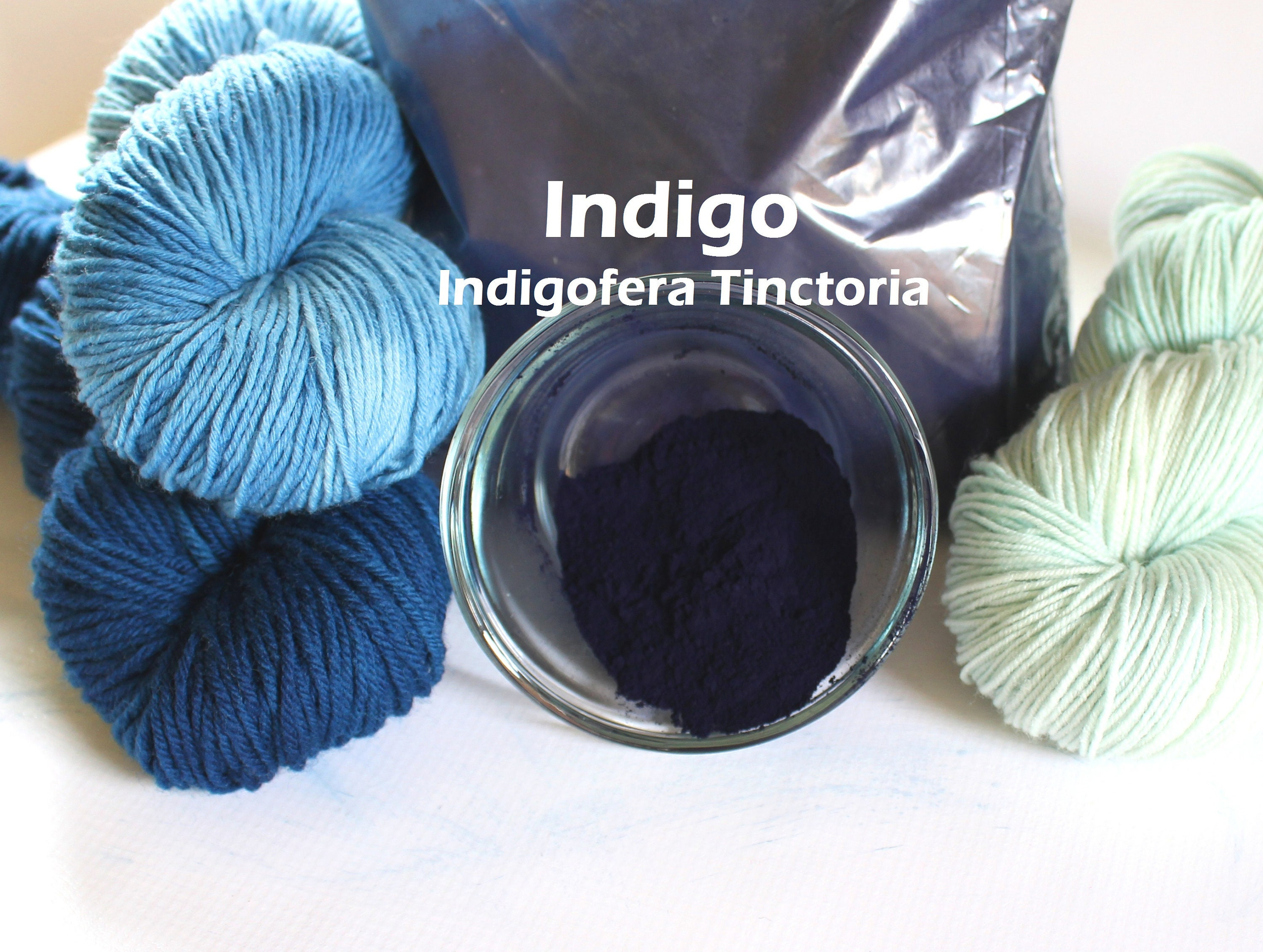 Image 1 of 4
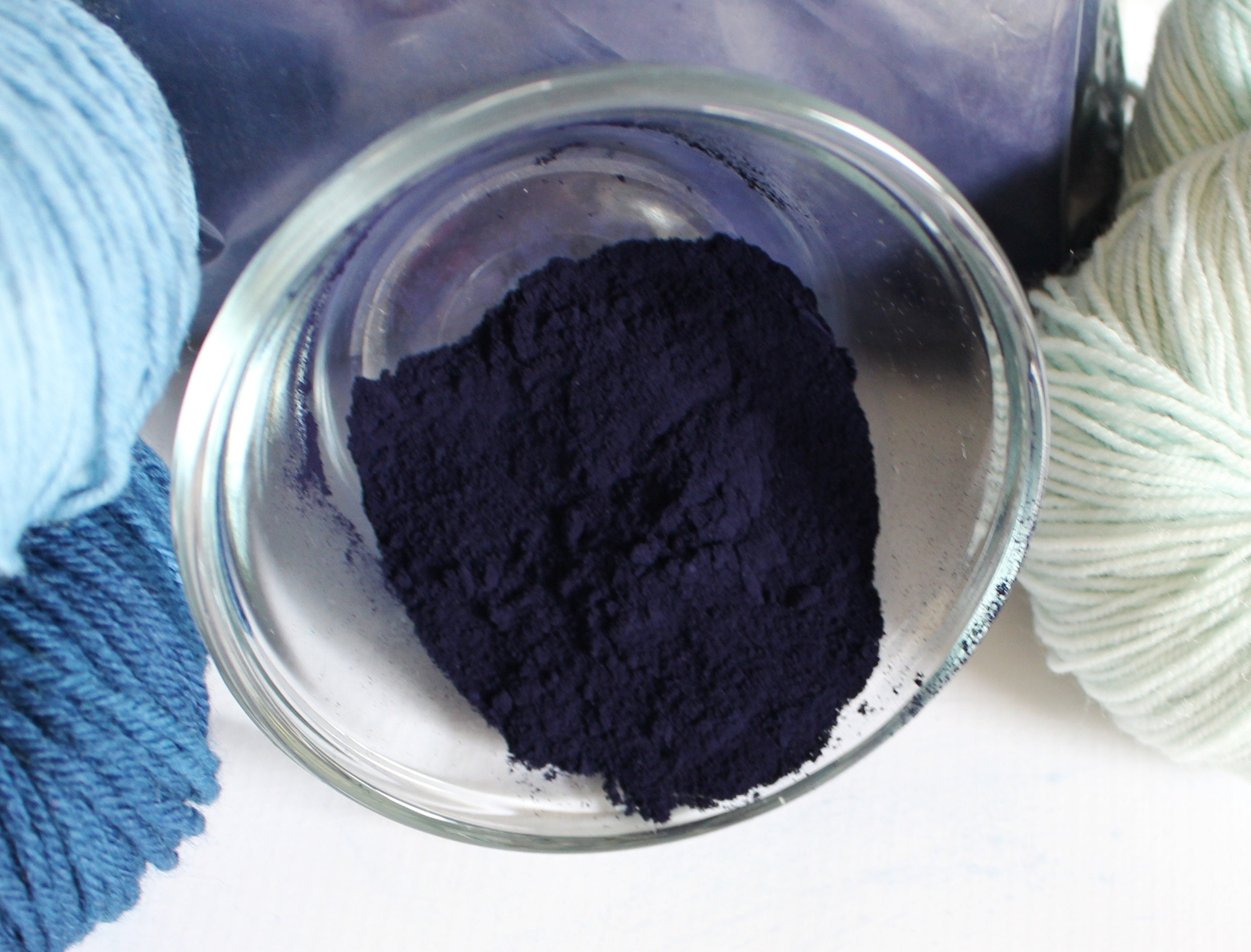 Image 2 of 4
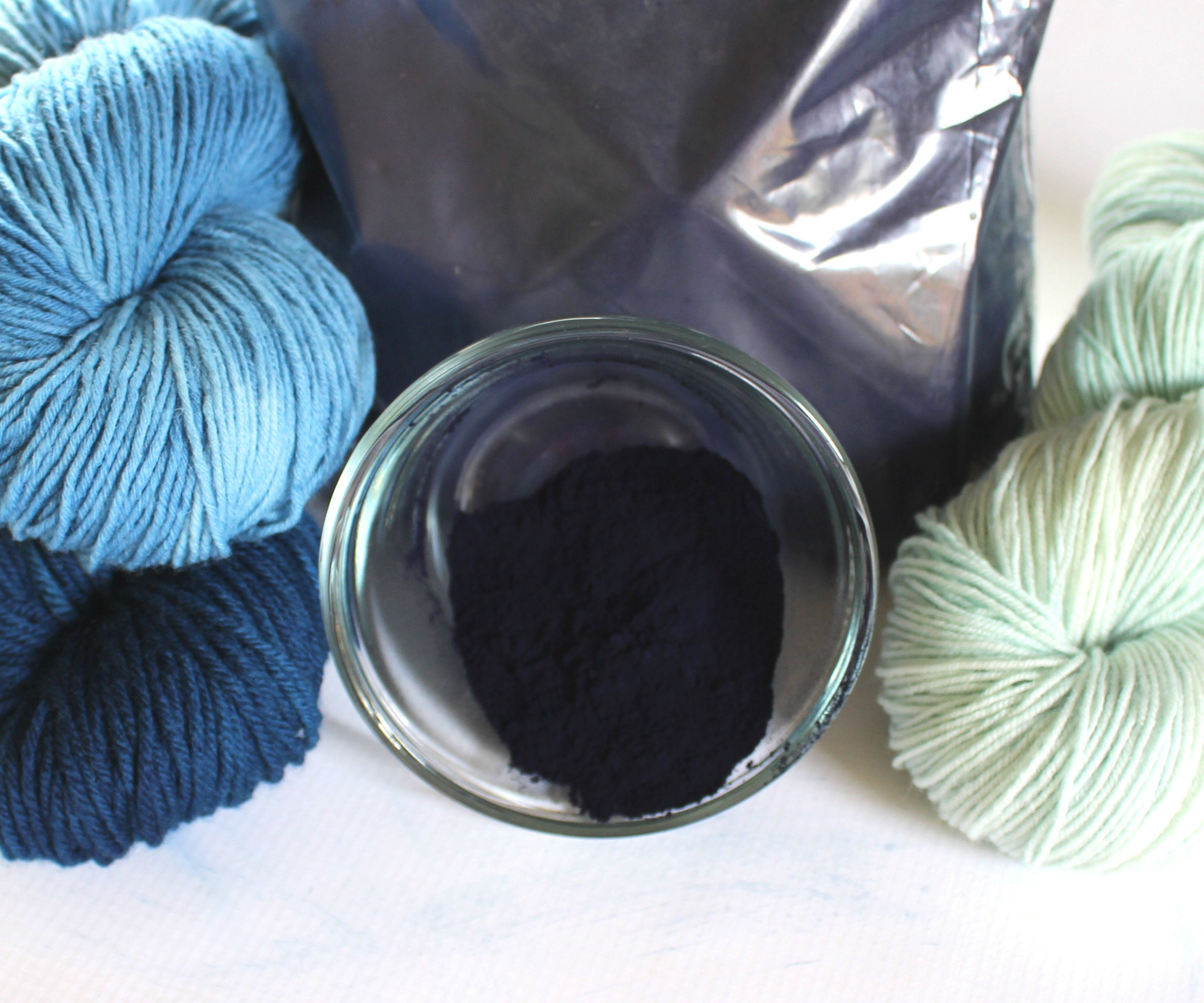 Image 3 of 4
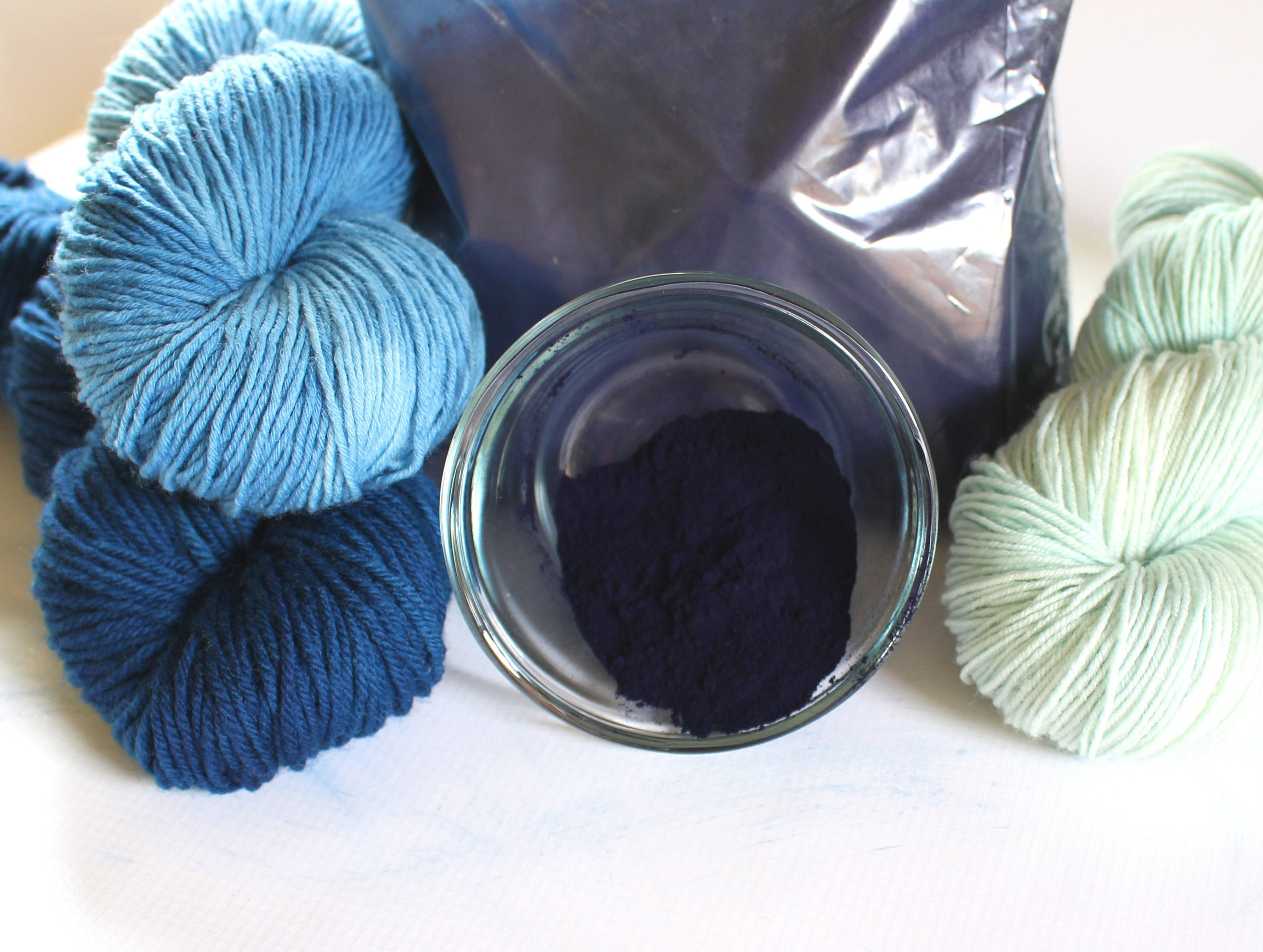 Image 4 of 4