Logwood Extract Powder Natural Plant Dye 1, 2 or 4oz for Yarn Protein Dyes Earth Friendly Dyeing
from $14.99
Priced and sold by 1, 2 or 4 oz quantities.
Logwood extract is a non oxydized plant extract obtained from logwood (Haematoxylum campechianum L.) wood. This Logwood extract easily gives a deep dark purple dye.
Logwood is a red wood tree originated from the Bay of Campeche, in the Southeast of Mexico. It was introduced and widely naturalized in the 18th Century in South America and in West Indies. It was first imported in Europe as a dye matter, shortly after the arrival of the Spanish in Central America. But for many years (from 1581 to 1662), an English law prohibited its use in order to protect the dyes that were already used. Historically it was the basis and indispensable to achieve a true black on cloth, especially mourning clothes. It is currently found in many tropical countries.
Logwood is not as fast as some other natural dyes, but it gives the most beautiful lavenders. I tested a sample of the Logwood wool yarn that I had dyed, and I felt it held up pretty well, so I'm not afraid to use it for items that will not be exposed to a lot of sunlight for extended periods of time.
For increased fastness, use 25% aluminum sulphate mordant, rather than 10% alum mordant.
Logwood can be dyed on all fibers with use of a mordant. Changes in pH can affect the tone of the dye, making it more blue-ish.
I will include an information sheet on dyeing with Logwood.
**Buyer is responsible for import/export rules to their country.**
I ship all my products as quickly as possible.
Priced and sold by 1, 2 or 4 oz quantities.
Logwood extract is a non oxydized plant extract obtained from logwood (Haematoxylum campechianum L.) wood. This Logwood extract easily gives a deep dark purple dye.
Logwood is a red wood tree originated from the Bay of Campeche, in the Southeast of Mexico. It was introduced and widely naturalized in the 18th Century in South America and in West Indies. It was first imported in Europe as a dye matter, shortly after the arrival of the Spanish in Central America. But for many years (from 1581 to 1662), an English law prohibited its use in order to protect the dyes that were already used. Historically it was the basis and indispensable to achieve a true black on cloth, especially mourning clothes. It is currently found in many tropical countries.
Logwood is not as fast as some other natural dyes, but it gives the most beautiful lavenders. I tested a sample of the Logwood wool yarn that I had dyed, and I felt it held up pretty well, so I'm not afraid to use it for items that will not be exposed to a lot of sunlight for extended periods of time.
For increased fastness, use 25% aluminum sulphate mordant, rather than 10% alum mordant.
Logwood can be dyed on all fibers with use of a mordant. Changes in pH can affect the tone of the dye, making it more blue-ish.
I will include an information sheet on dyeing with Logwood.
**Buyer is responsible for import/export rules to their country.**

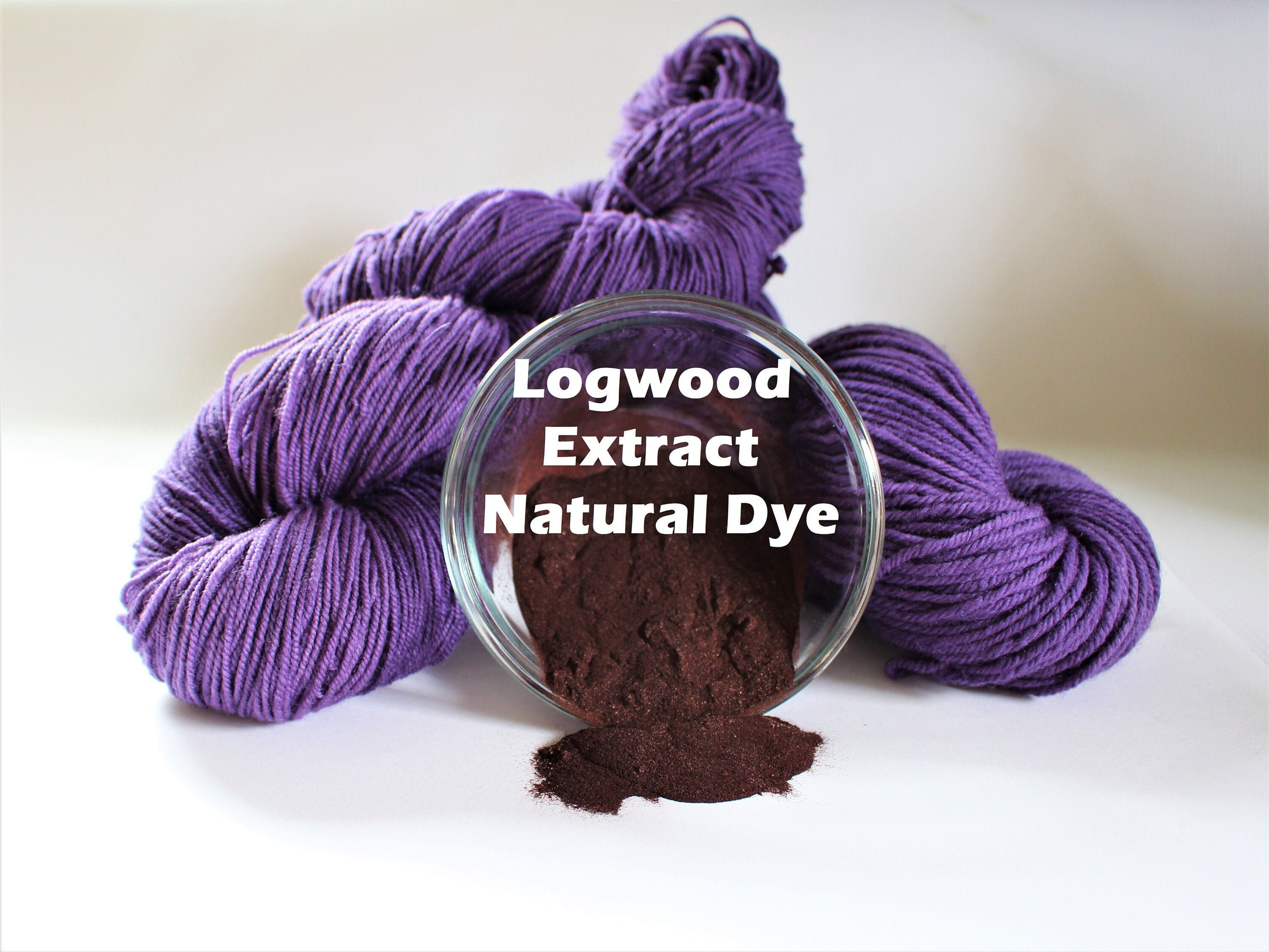 Image 1 of 3
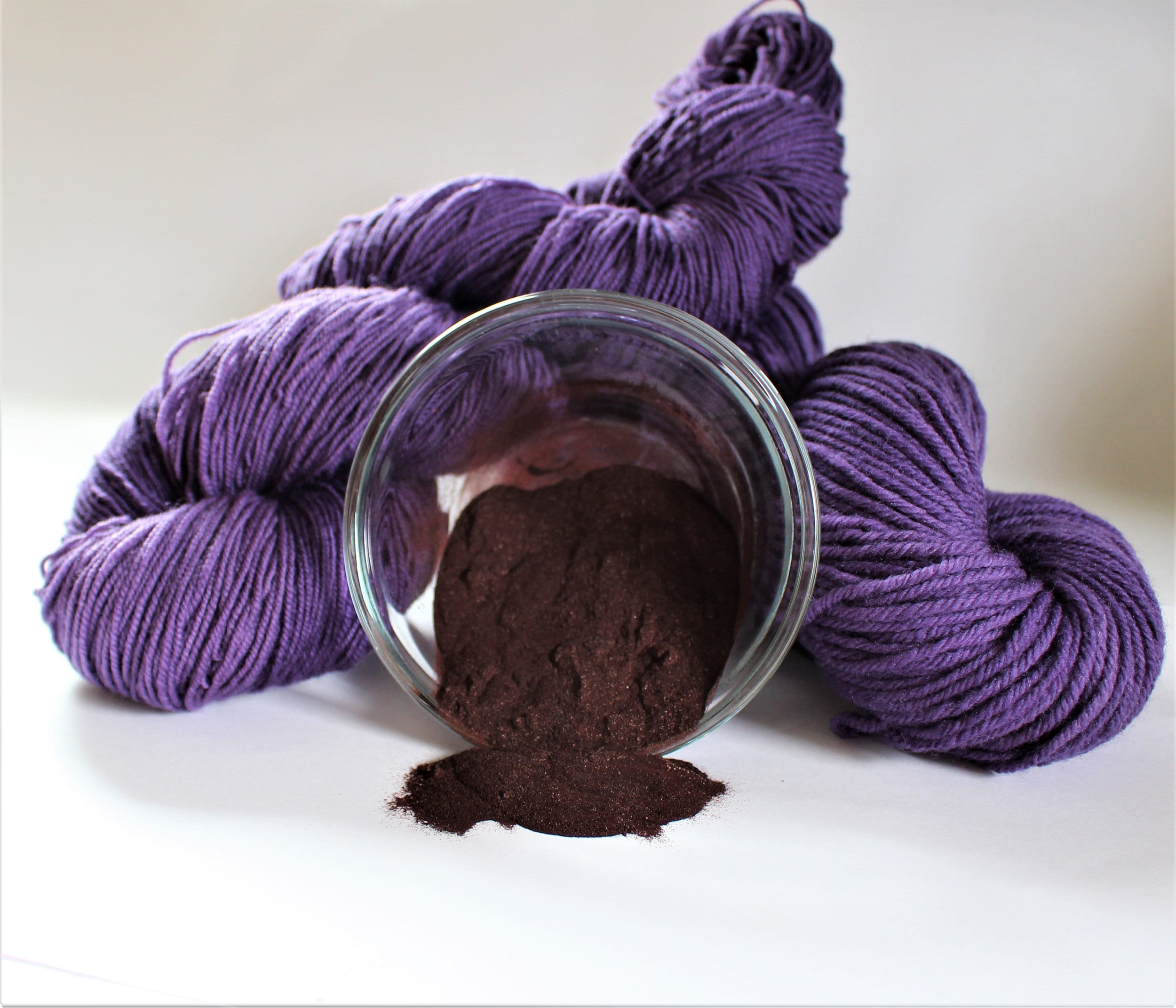 Image 2 of 3
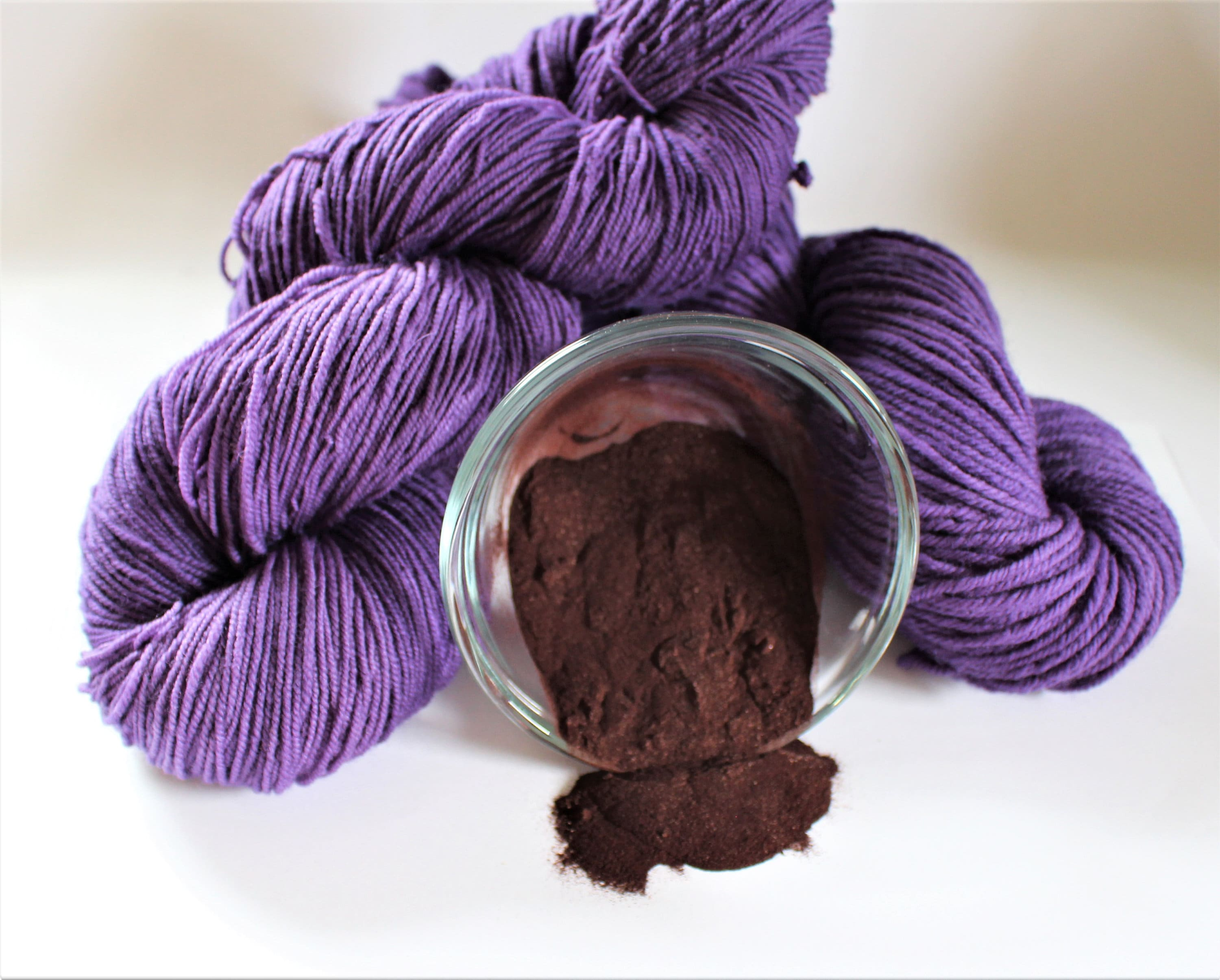 Image 3 of 3