Madder, 'Rubia tinctorium', common madder, dyer's madder, rose madder is an enormously important natural dye plant. It's importance as a dye plant throughout history cannot be over stated.
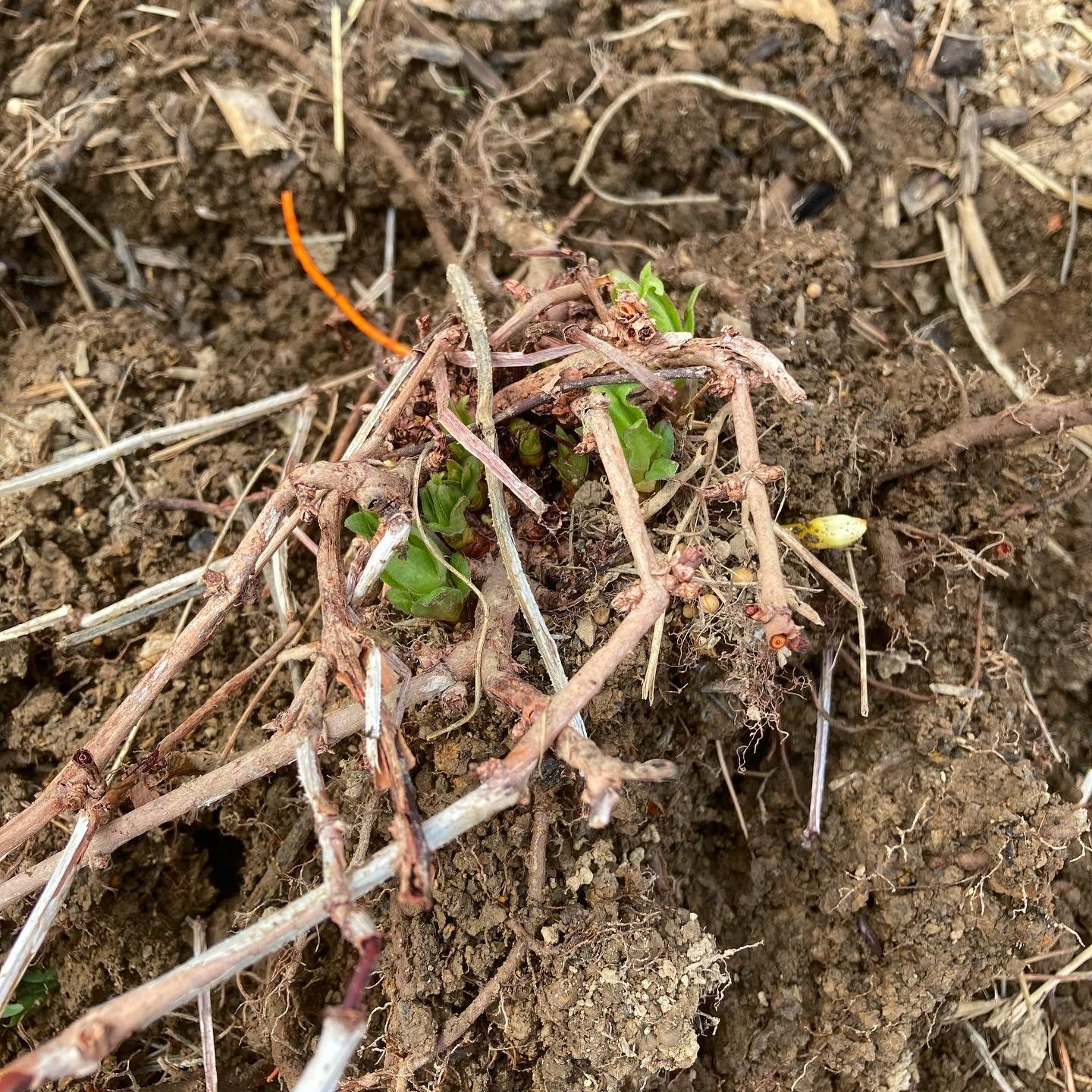
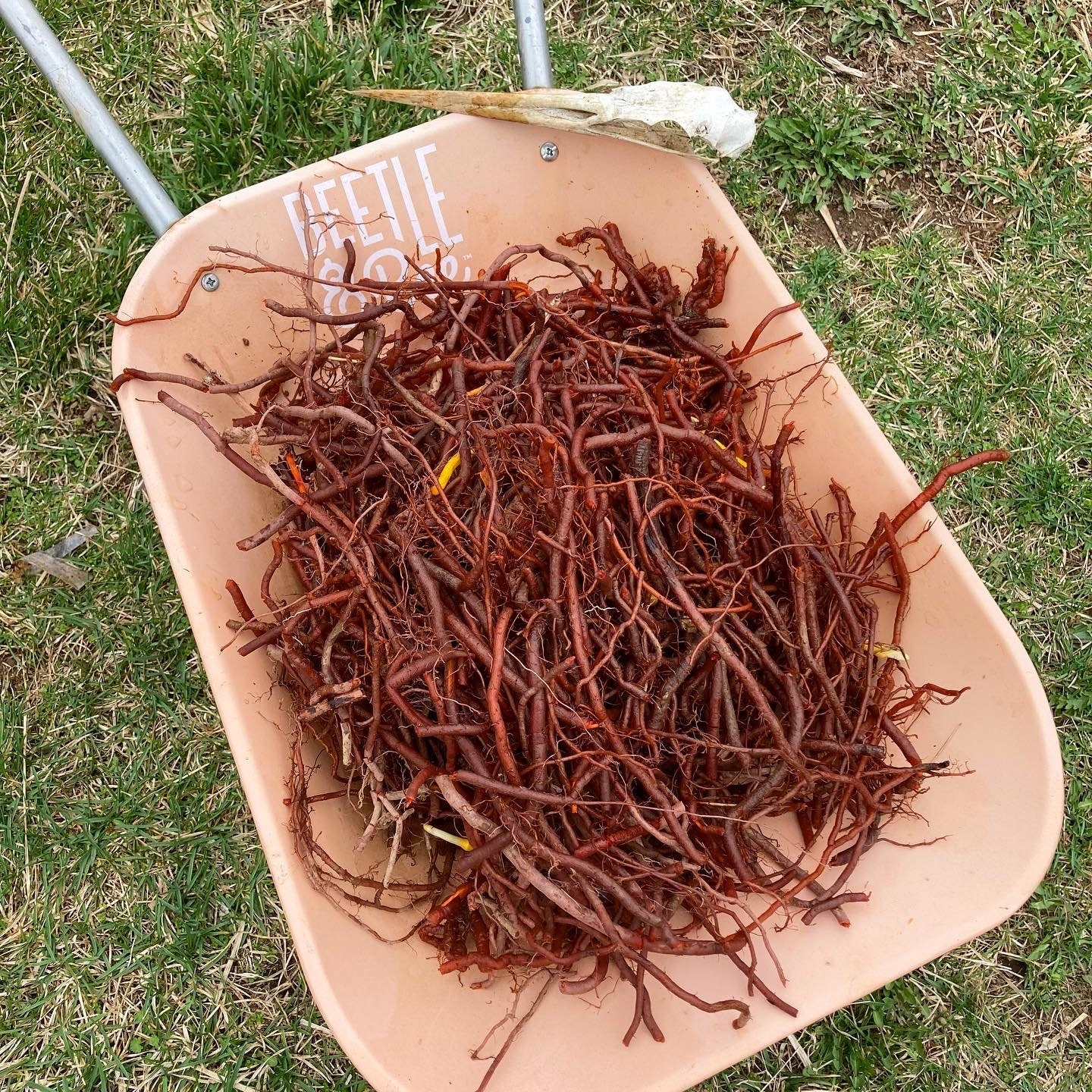
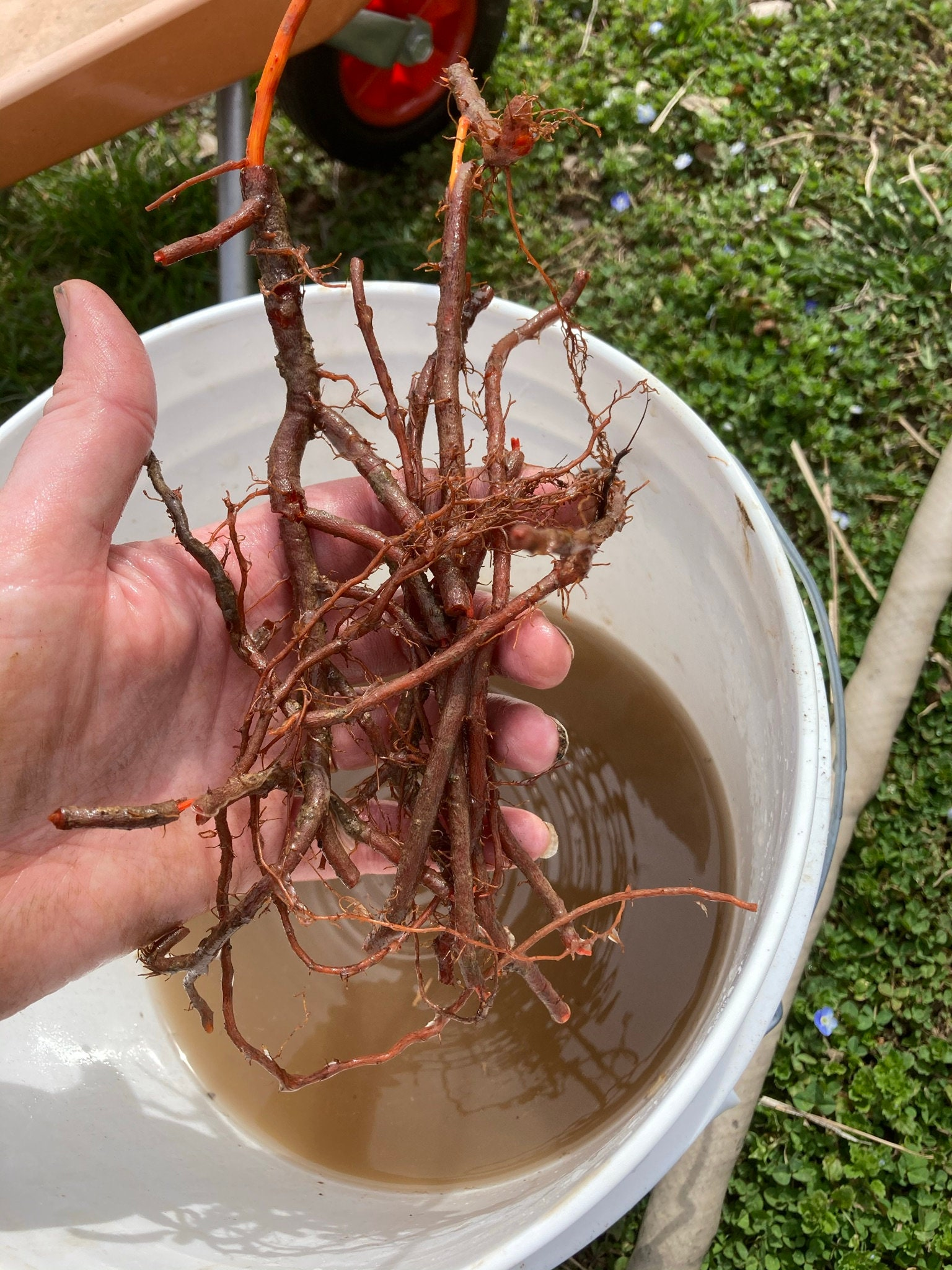
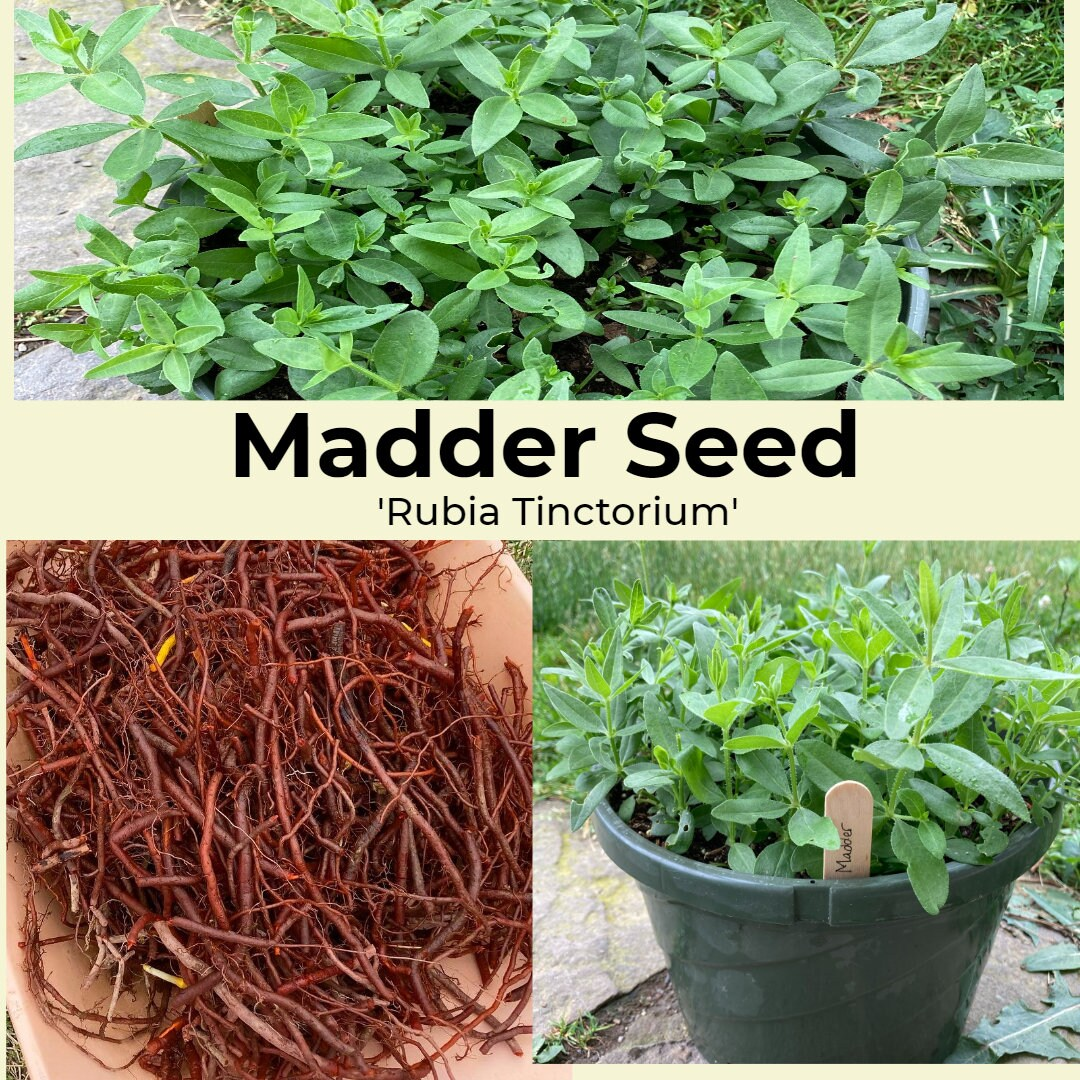
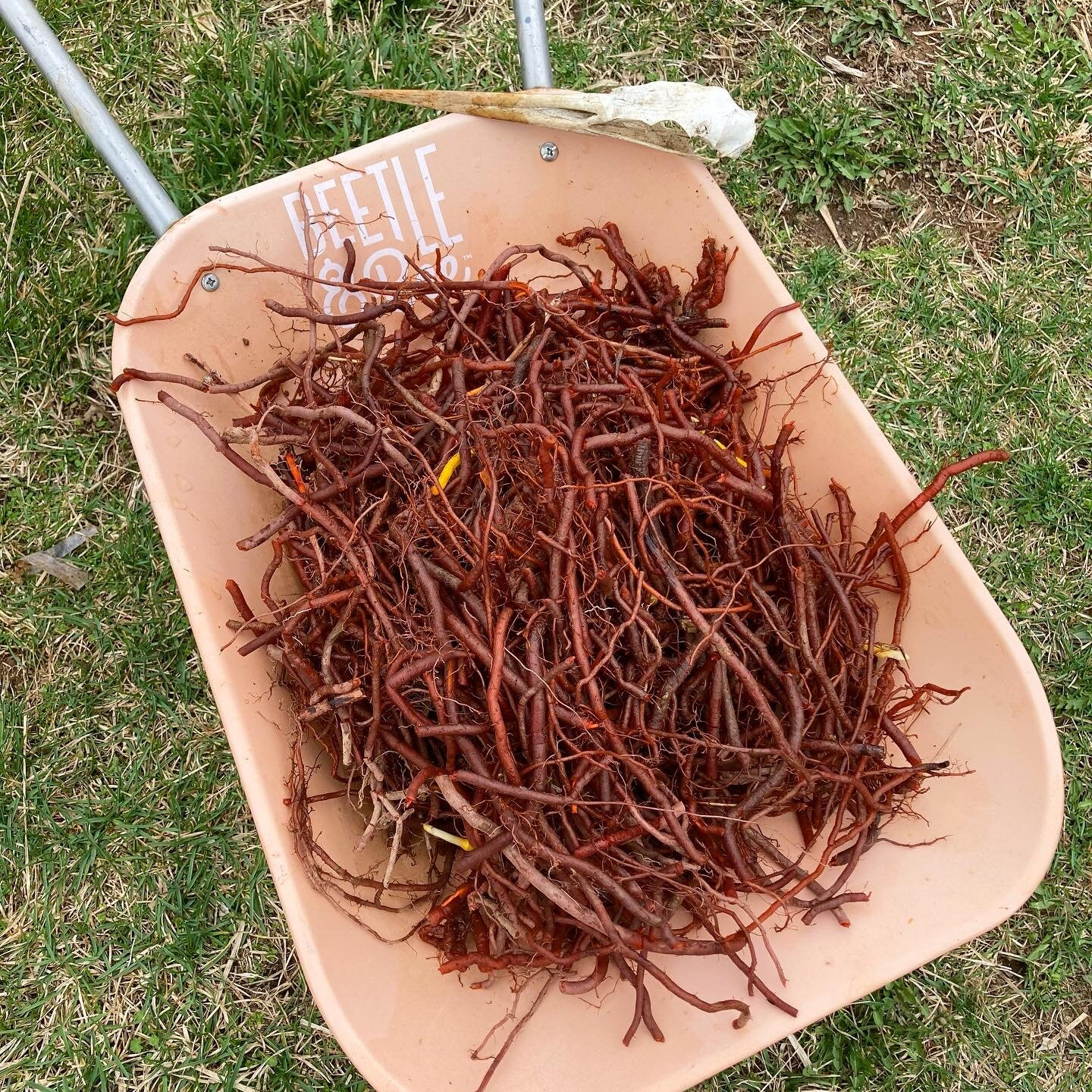
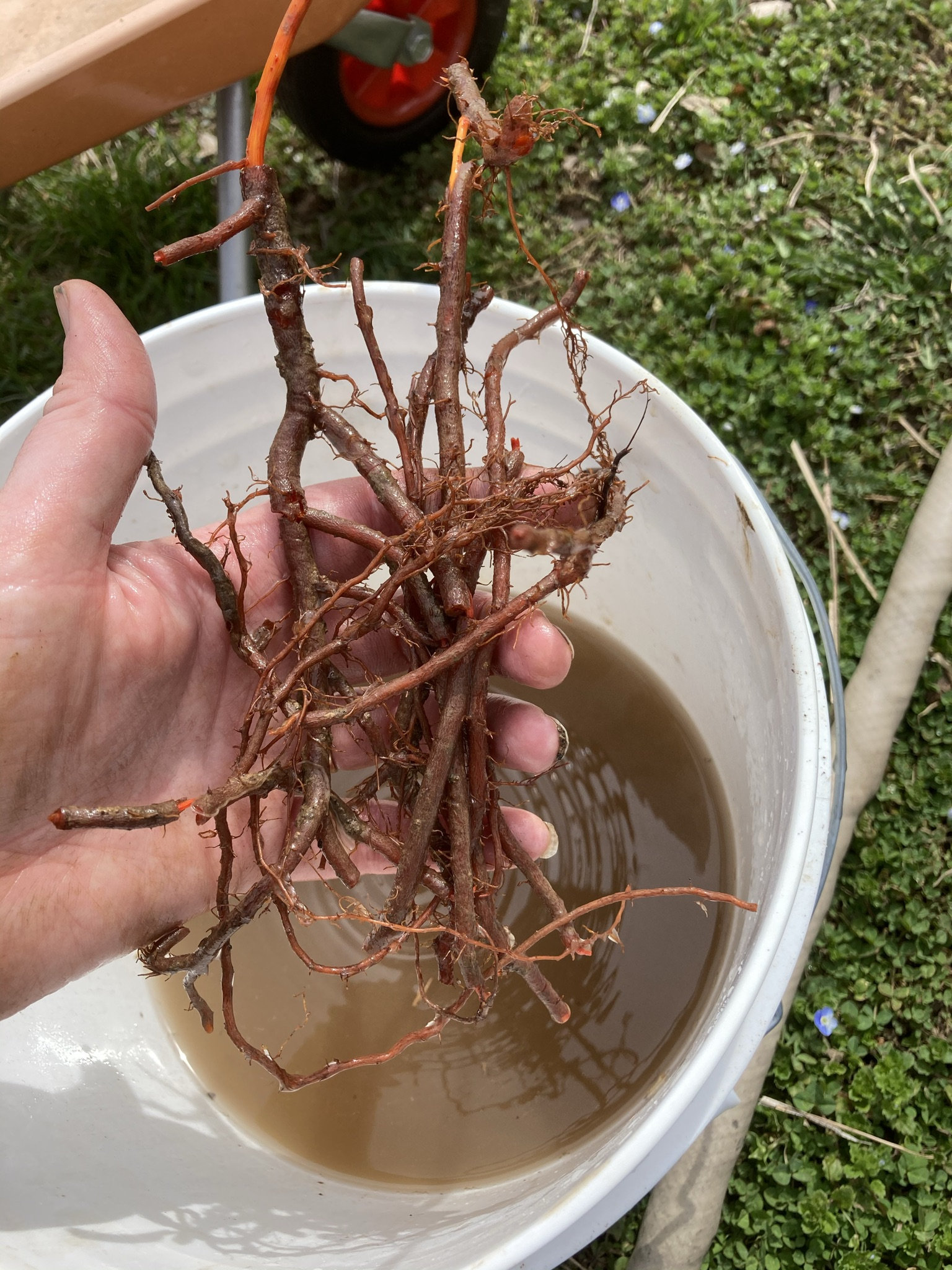
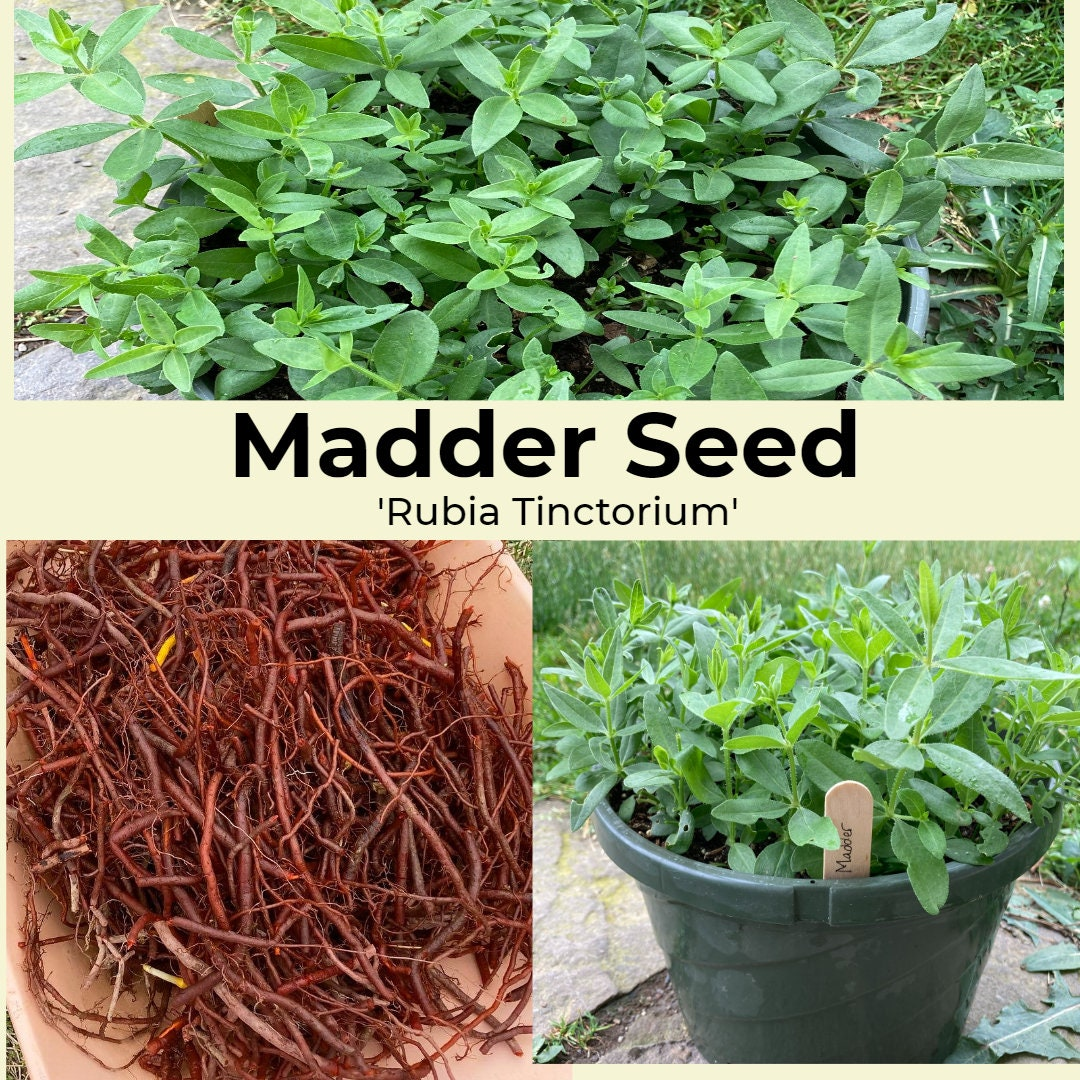
I had read that madder seeds do not germinate well, but the seeds that I planted germinated excellently! I have had a madder bed for 3 years and you can see in the listing pictures, the amount of root that I harvested this spring.
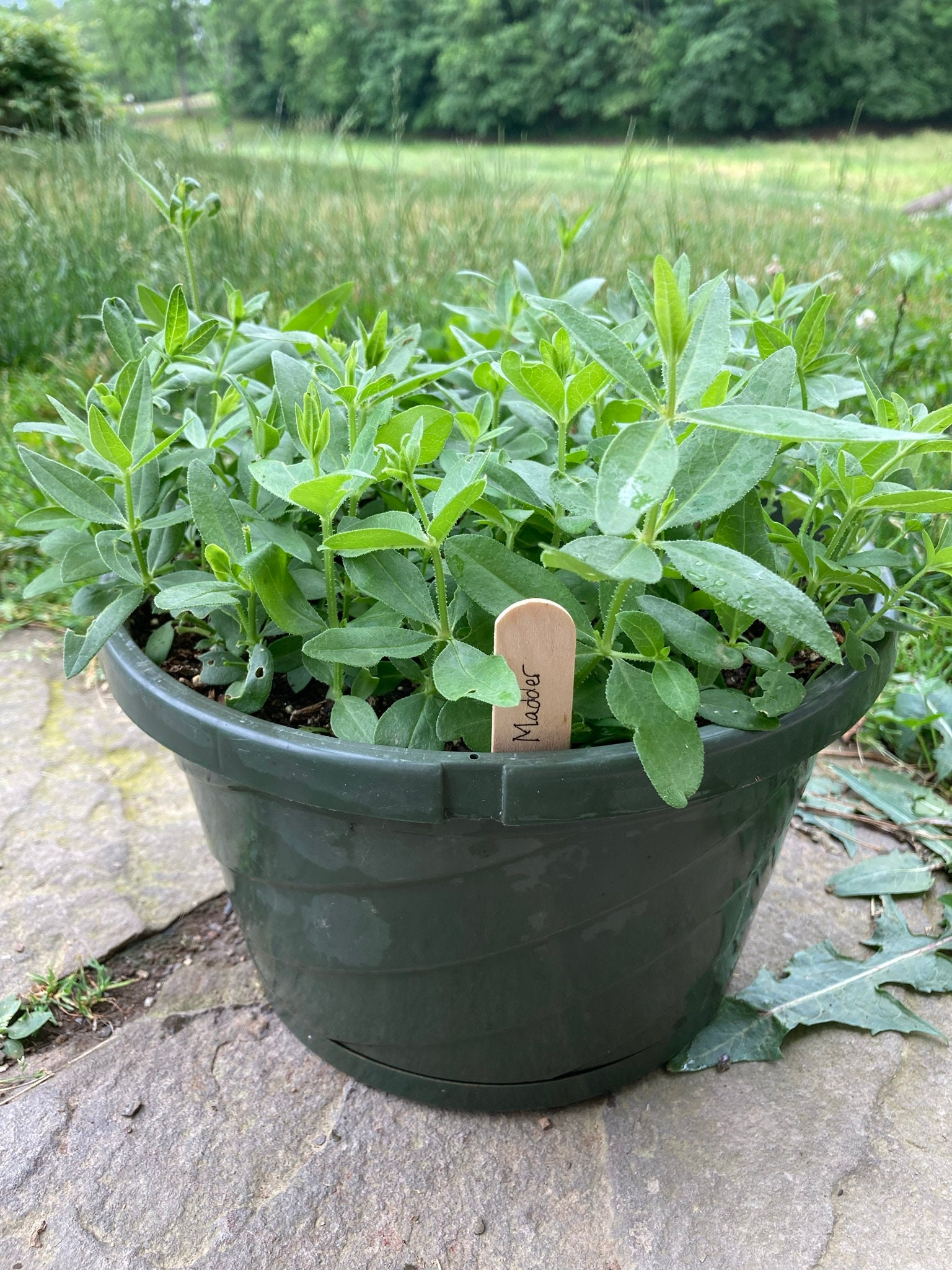
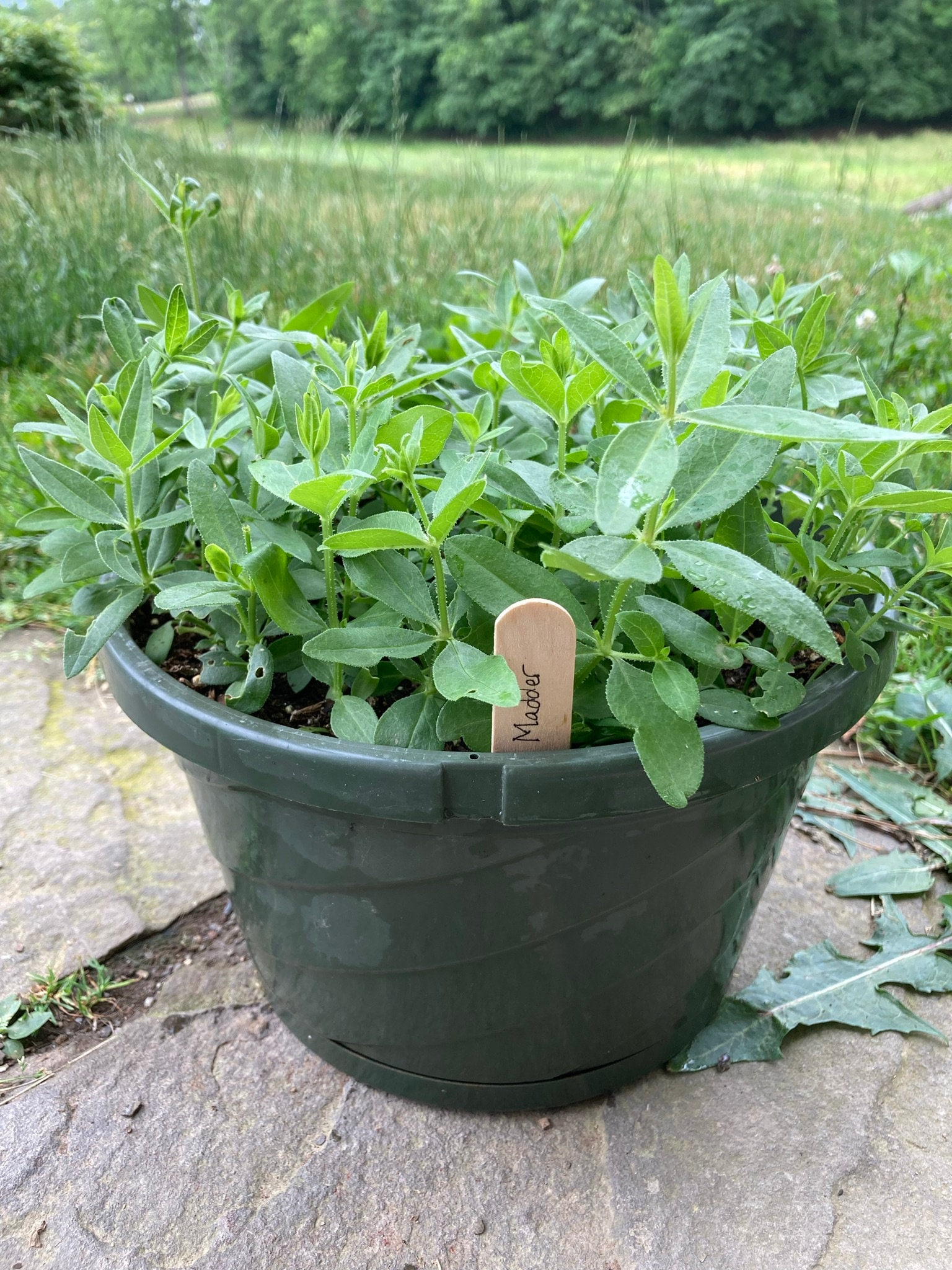
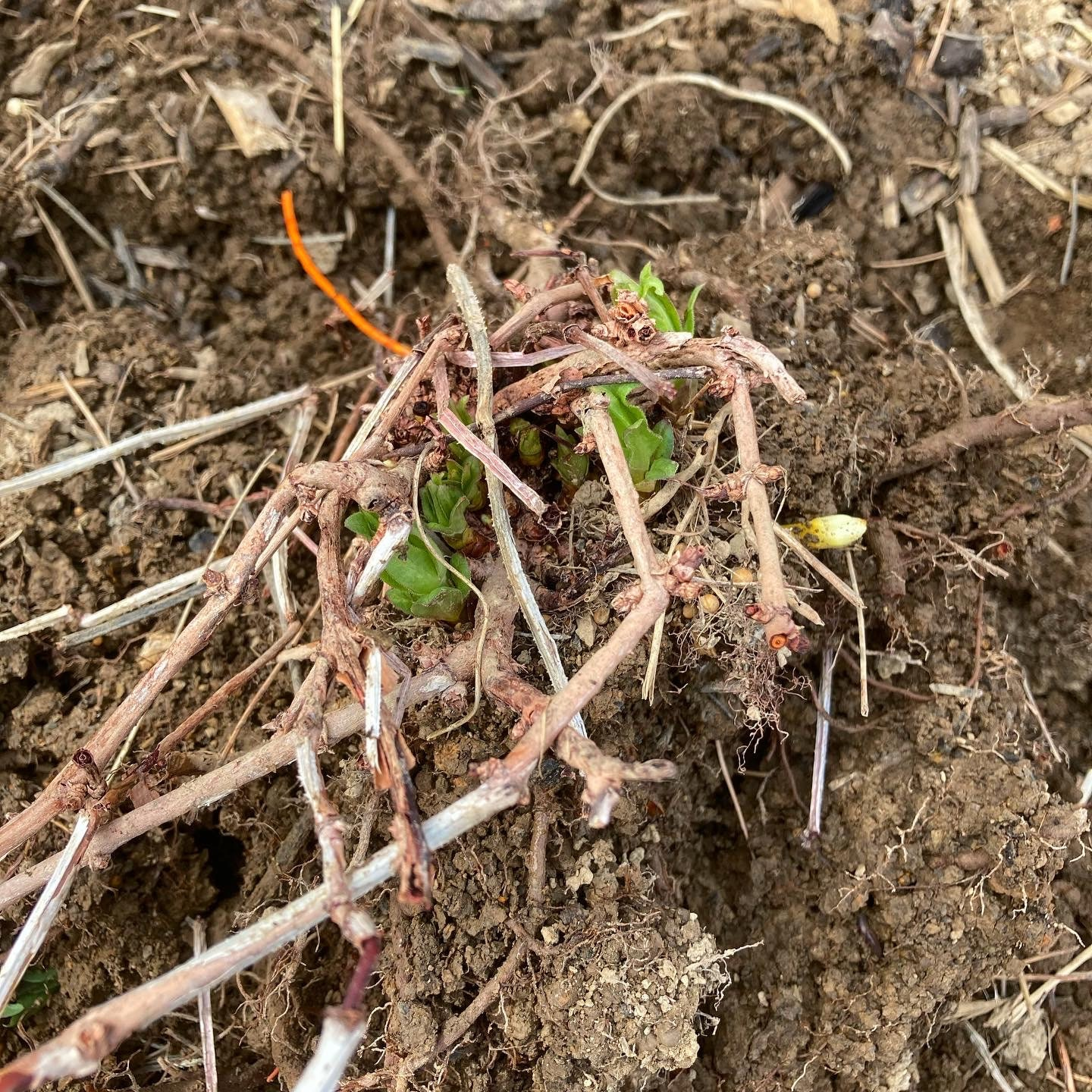
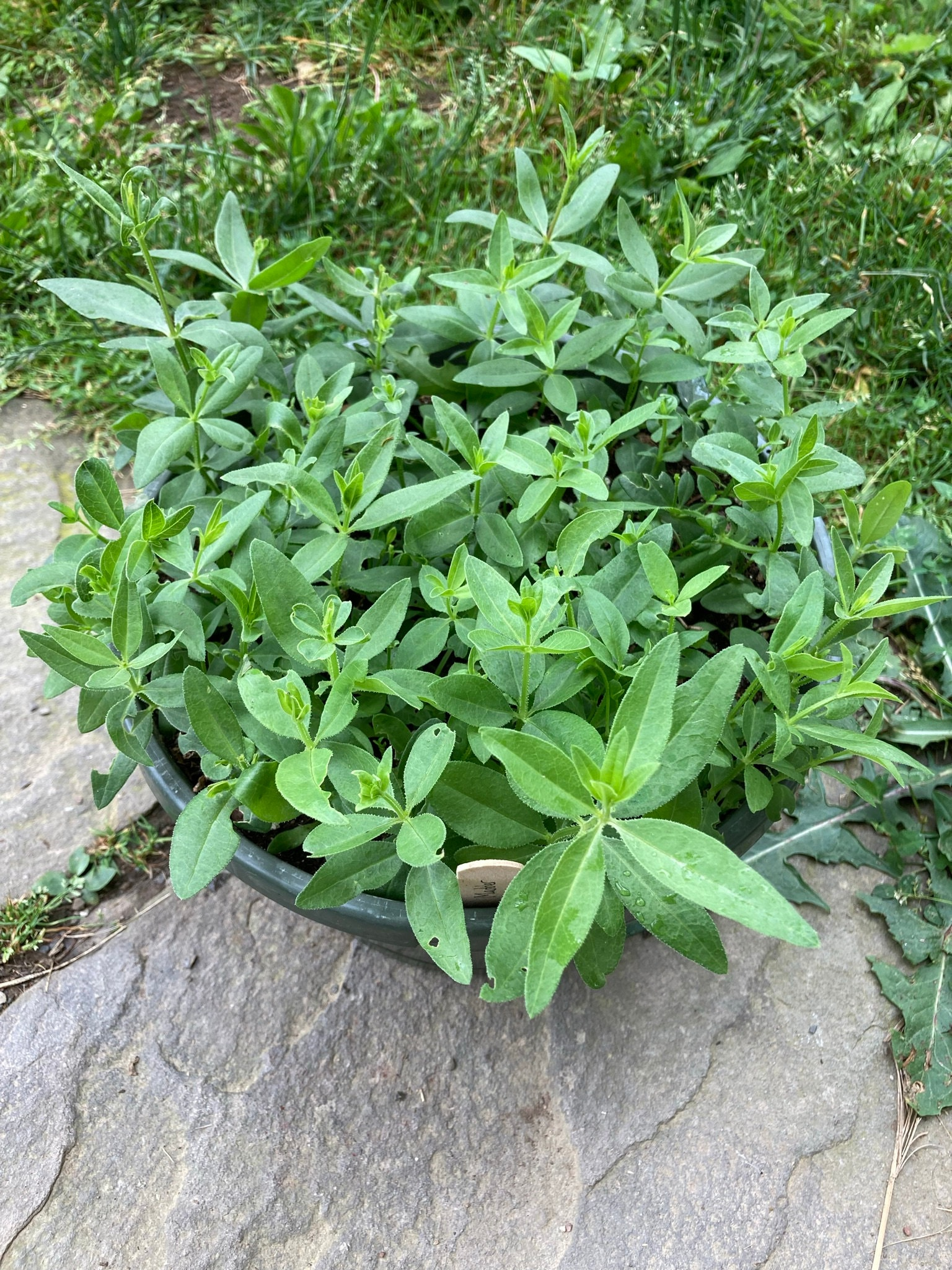
Madder is in the family of the weedy, sticky willy plants, and you will notice that the leaves and stems have sort of a velcro tendency when you brush over them. They also can be invasive, as they have very strong growing roots that want to go places in the ground! The tops of the plants as well can want to be a bit trailing. I have it planted in a bed about 3' x 5' slightly raised bed with a mulched garden walkway on one side and grass lawn on the other. For 3 years, it has kept well within those borders. When I harvested, I did noticed that some roots were going under and into the mulch walkway area. I haven't found it to be a problem spreading and coming up other places so far. Some people grow it in pots so that it is well contained.
The roots are best used as a dye, if dried first, which is handy! Then, to use as a dye, crush or break them up as much as possible and soak in water and heat, to make a dye bath. Madder can actually be used as a lightfast dye without the need for an aluminum mordant. You can use a tannin with your madder root instead.
I will include an information sheet on how to dye with madder root, when you order.
These seeds have been grown and harvested here in my gardens.
30 seeds per packet.
Madder, 'Rubia tinctorium', common madder, dyer's madder, rose madder is an enormously important natural dye plant. It's importance as a dye plant throughout history cannot be over stated.
I had read that madder seeds do not germinate well, but the seeds that I planted germinated excellently! I have had a madder bed for 3 years and you can see in the listing pictures, the amount of root that I harvested this spring.
Madder is in the family of the weedy, sticky willy plants, and you will notice that the leaves and stems have sort of a velcro tendency when you brush over them. They also can be invasive, as they have very strong growing roots that want to go places in the ground! The tops of the plants as well can want to be a bit trailing. I have it planted in a bed about 3' x 5' slightly raised bed with a mulched garden walkway on one side and grass lawn on the other. For 3 years, it has kept well within those borders. When I harvested, I did noticed that some roots were going under and into the mulch walkway area. I haven't found it to be a problem spreading and coming up other places so far. Some people grow it in pots so that it is well contained.
The roots are best used as a dye, if dried first, which is handy! Then, to use as a dye, crush or break them up as much as possible and soak in water and heat, to make a dye bath. Madder can actually be used as a lightfast dye without the need for an aluminum mordant. You can use a tannin with your madder root instead.
I will include an information sheet on how to dye with madder root, when you order.
These seeds have been grown and harvested here in my gardens.