Murasaki Seed, Lithospermum erythrorizon, 25 seeds natural dye plant, purple red gromwell zi cao
25 seeds per packet.
Murasaki is also known as purple or red gromwell or red root lithospermum or zicao in Chinese, jichi in Korean or murasaki in Japanese.
The dye compound in the roots is shikonin which is somewhat similar to the more widely used dye compound alkannin from dyer's alkanet.
Seeds take a while to germinate, and the soil should be kept moist during and after germination. Plant outdoors after danger of frost, or start in a flat. These are a perennial and have been very hardy where I live in zone 6b in south-central PA. Plant in nice loose soil, because you want the roots to be able to grow well, since that is what you want to harvest for the dye.
I will include an information sheet when you order.
The roots are what you use, either dried or fresh to derive the dye from. Second or 3rd year roots are best, since they've had some time to grow and get thicker. You massage the roots in water for a half hour or more, to derive the lavender dye. Now, I used a small amount of second year roots, because I didn't want to dig up my whole murasaki patch. I rinsed the roots and massaged them a while in the water and then added my alum-mordanted superwash wool yarn.
I was getting a light lavender on my yarn, but then I thought, well, let's try adding some alcohol to the water, thinking that that may help and speed things up. Well, I don't think that was a good idea, because it seemed to turn the color of the water more orange brick color and the yarn then became tan. When I was just massaging the roots themselves in water, the water was a brick red color, and was imparting a faint lavender onto the wool.
I only had wanted to harvest that much of my murasaki patch, so that was the end of my experiment and I was kicking myself for adding the alcohol, but now I know not to do that again!
The dried roots are also used as a Chinese herbal medicine. There is little information that I was able to find on dyeing with Murasaki, and I will continue to experiment with it in coming years.
The dye made from murasaki roots was put under sumptuary laws during the Heian period and restricted murasaki dyed clothing to the Empress and her ladies in waiting.
25 seeds per packet.
Murasaki is also known as purple or red gromwell or red root lithospermum or zicao in Chinese, jichi in Korean or murasaki in Japanese.
The dye compound in the roots is shikonin which is somewhat similar to the more widely used dye compound alkannin from dyer's alkanet.
Seeds take a while to germinate, and the soil should be kept moist during and after germination. Plant outdoors after danger of frost, or start in a flat. These are a perennial and have been very hardy where I live in zone 6b in south-central PA. Plant in nice loose soil, because you want the roots to be able to grow well, since that is what you want to harvest for the dye.
I will include an information sheet when you order.
The roots are what you use, either dried or fresh to derive the dye from. Second or 3rd year roots are best, since they've had some time to grow and get thicker. You massage the roots in water for a half hour or more, to derive the lavender dye. Now, I used a small amount of second year roots, because I didn't want to dig up my whole murasaki patch. I rinsed the roots and massaged them a while in the water and then added my alum-mordanted superwash wool yarn.
I was getting a light lavender on my yarn, but then I thought, well, let's try adding some alcohol to the water, thinking that that may help and speed things up. Well, I don't think that was a good idea, because it seemed to turn the color of the water more orange brick color and the yarn then became tan. When I was just massaging the roots themselves in water, the water was a brick red color, and was imparting a faint lavender onto the wool.
I only had wanted to harvest that much of my murasaki patch, so that was the end of my experiment and I was kicking myself for adding the alcohol, but now I know not to do that again!
The dried roots are also used as a Chinese herbal medicine. There is little information that I was able to find on dyeing with Murasaki, and I will continue to experiment with it in coming years.
The dye made from murasaki roots was put under sumptuary laws during the Heian period and restricted murasaki dyed clothing to the Empress and her ladies in waiting.

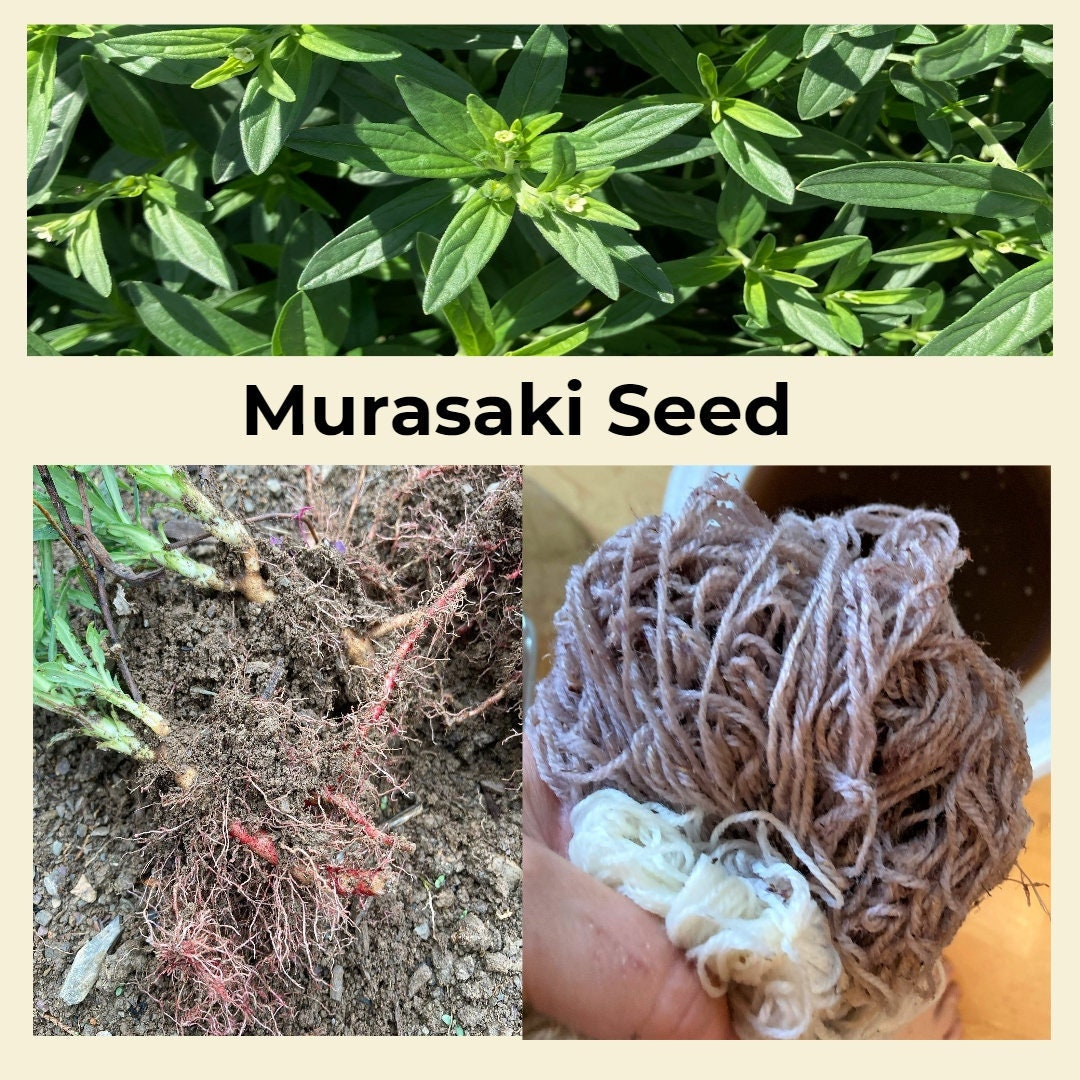 Image 1 of 9
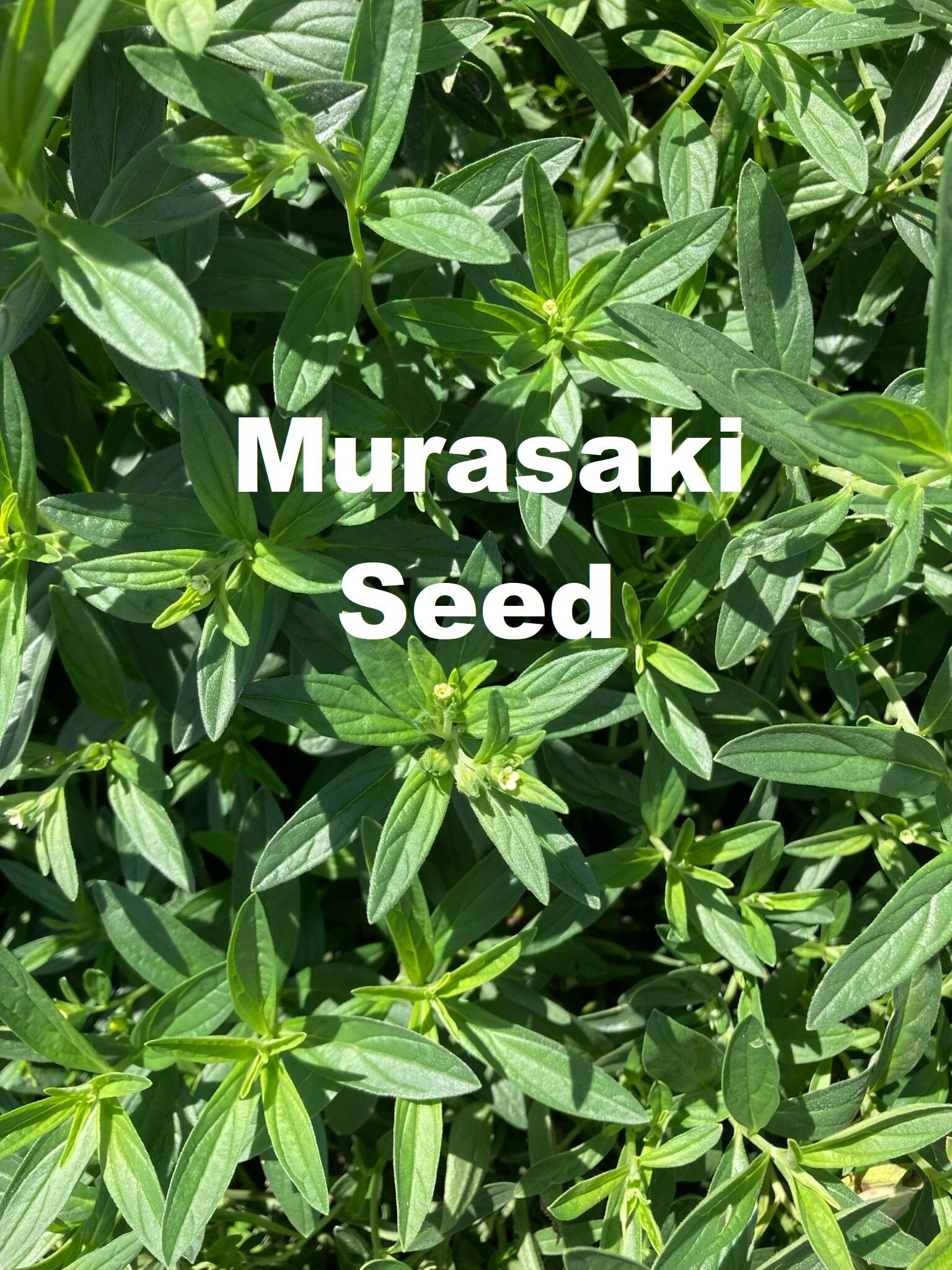 Image 2 of 9
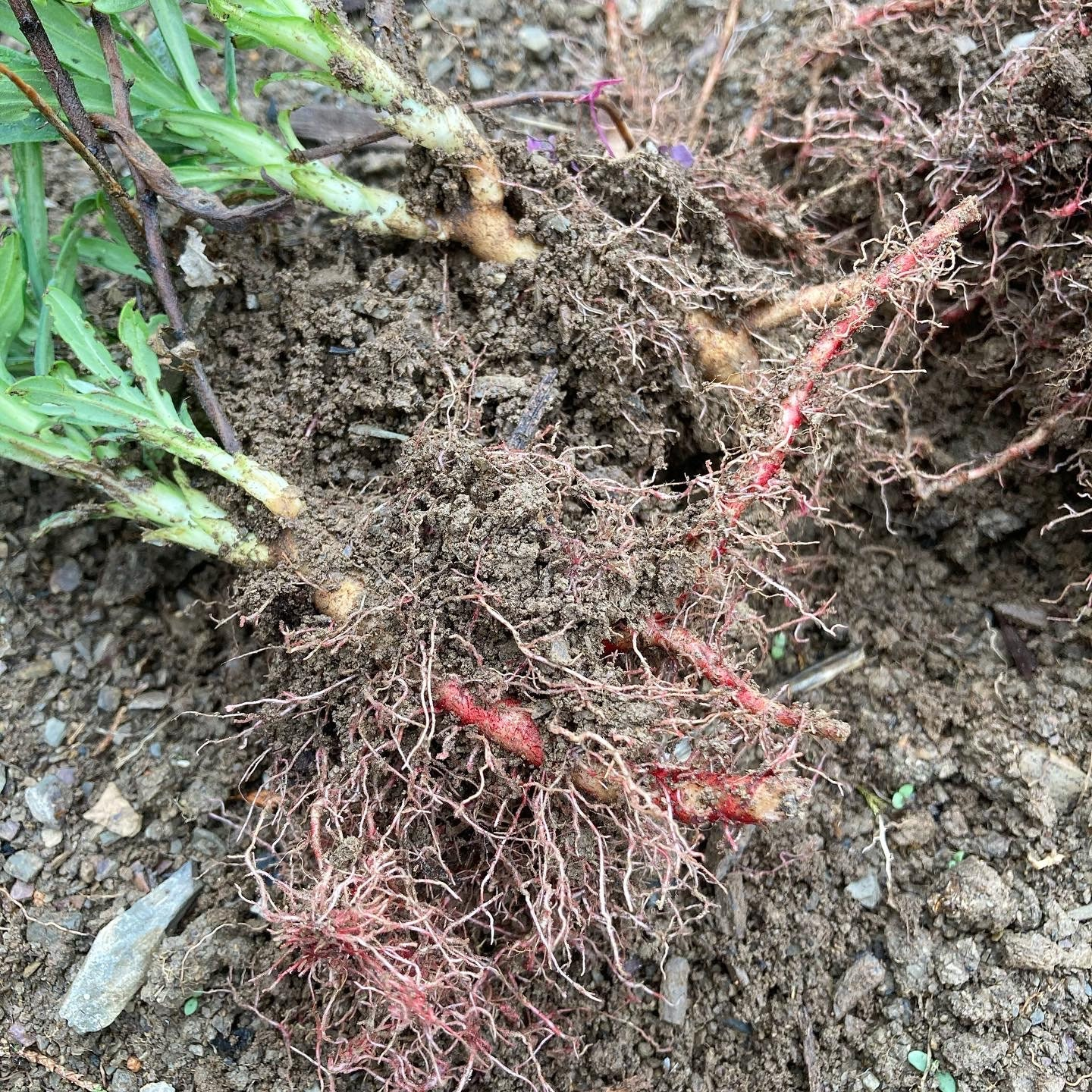 Image 3 of 9
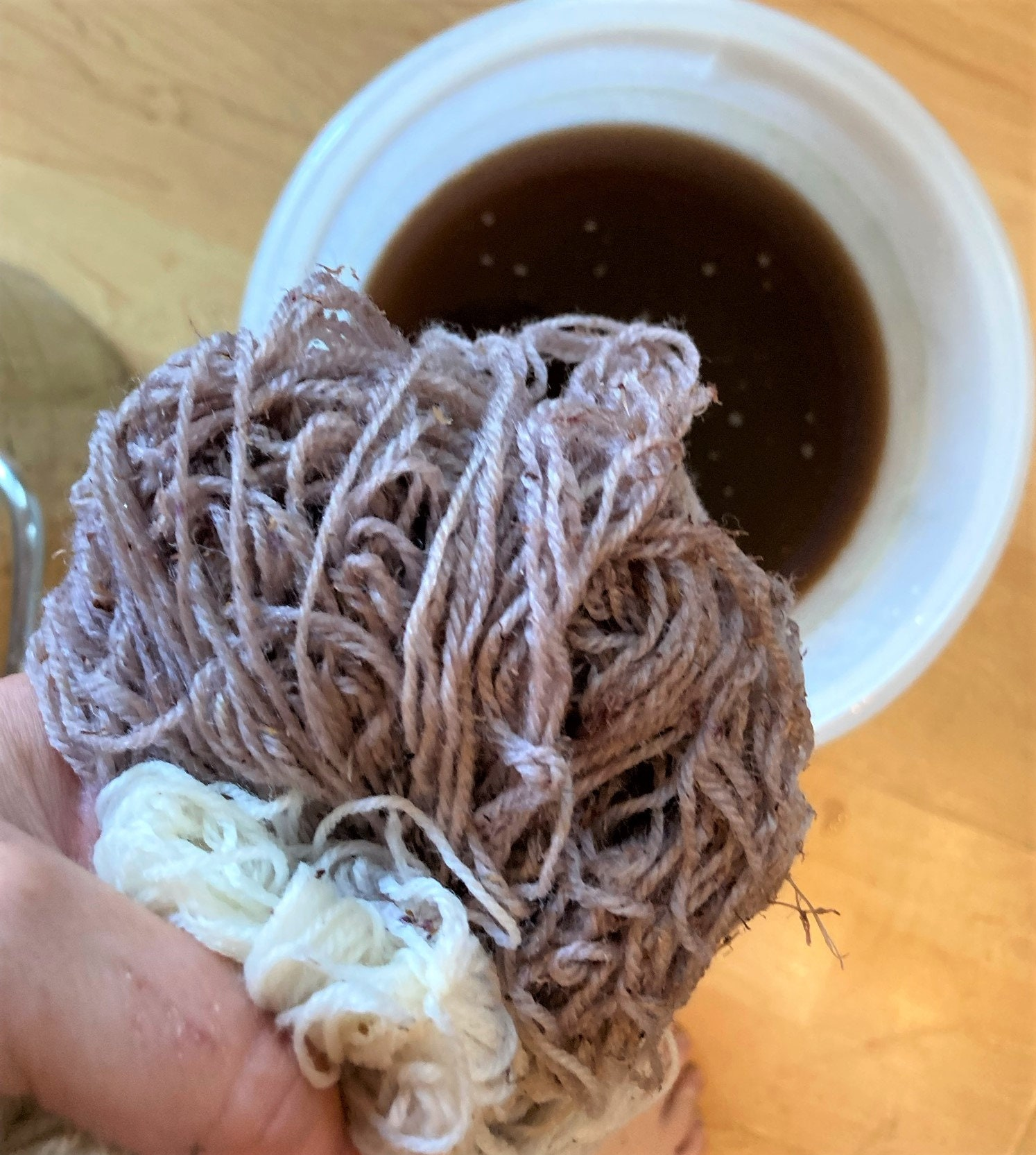 Image 4 of 9
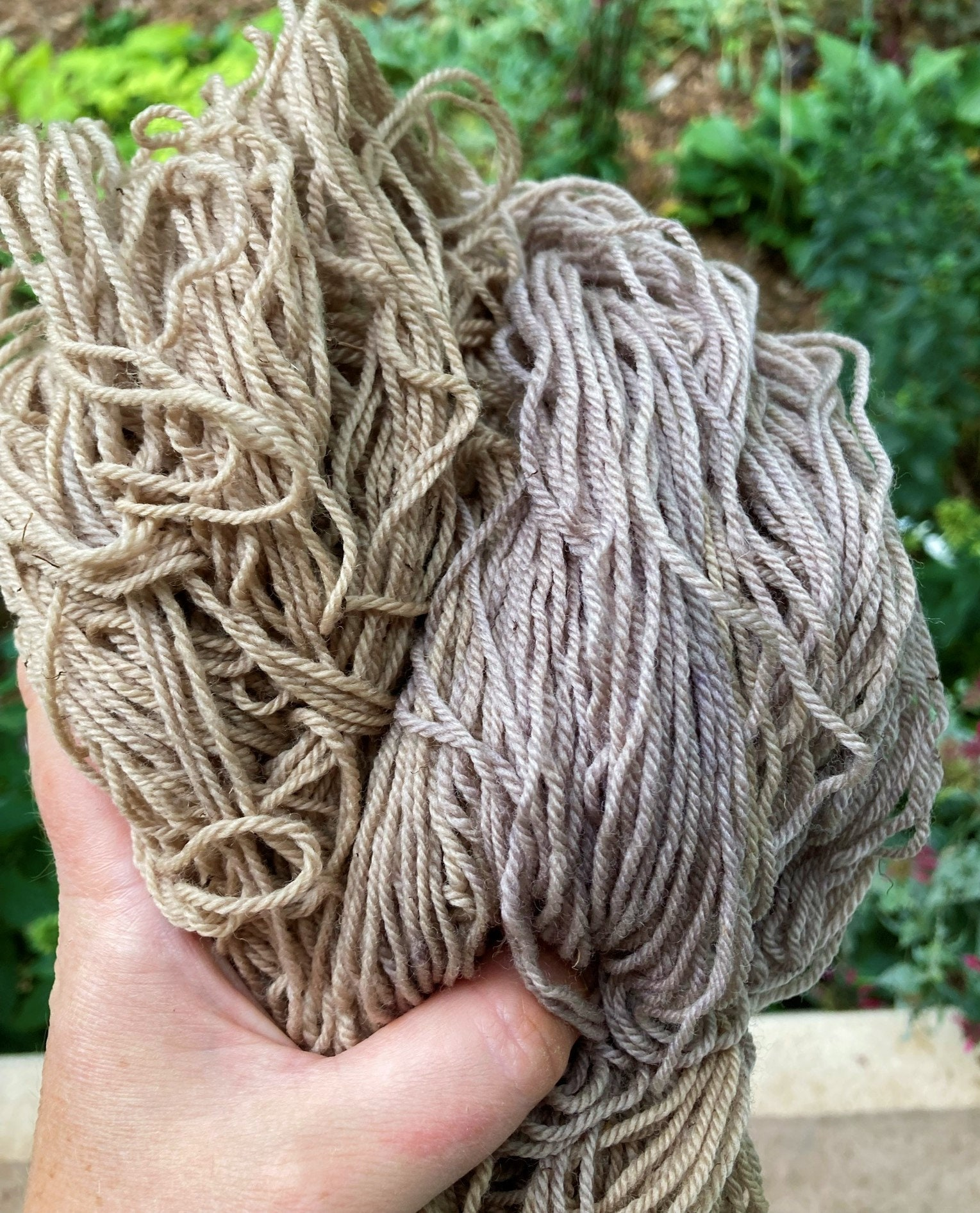 Image 5 of 9
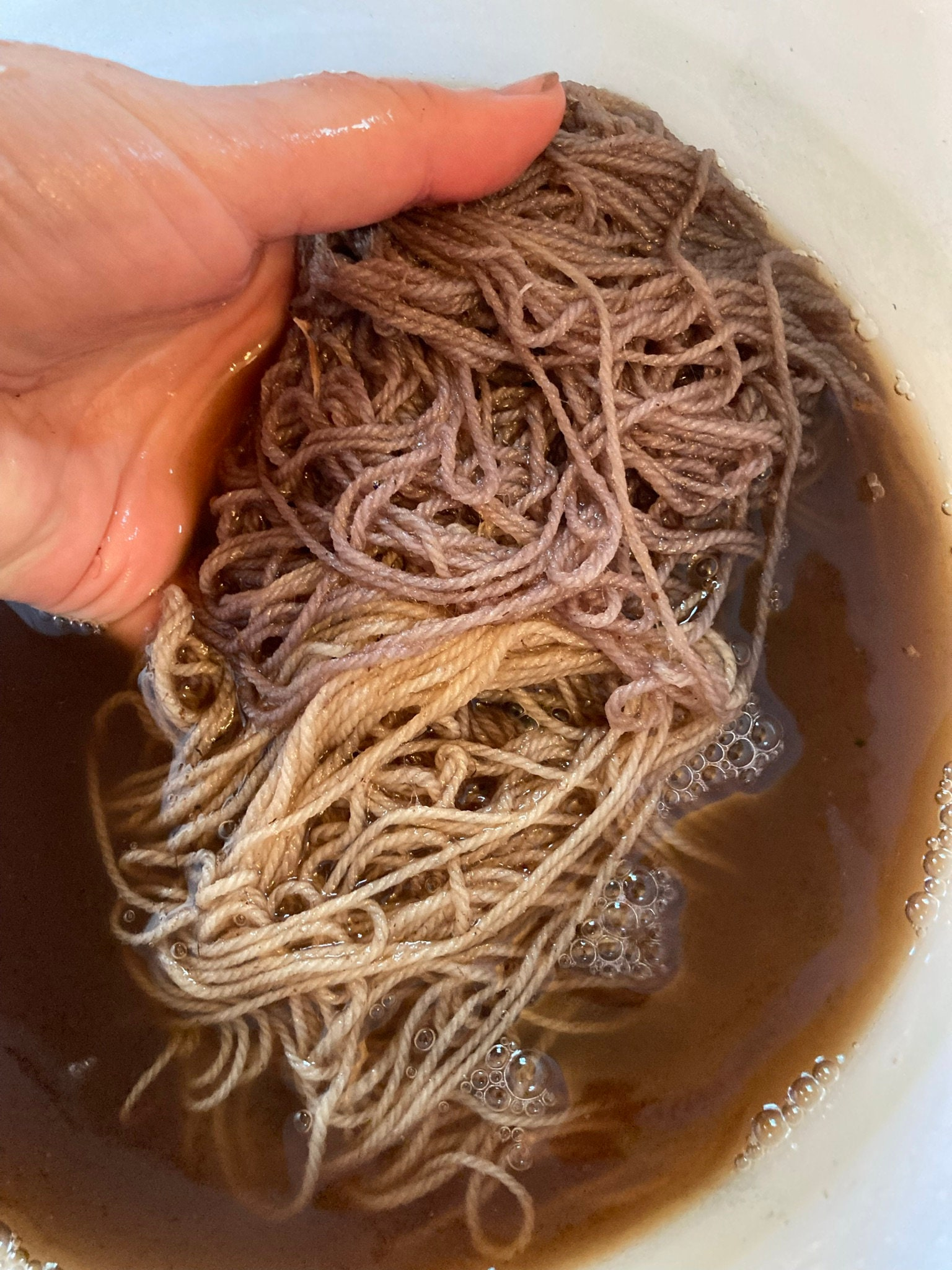 Image 6 of 9
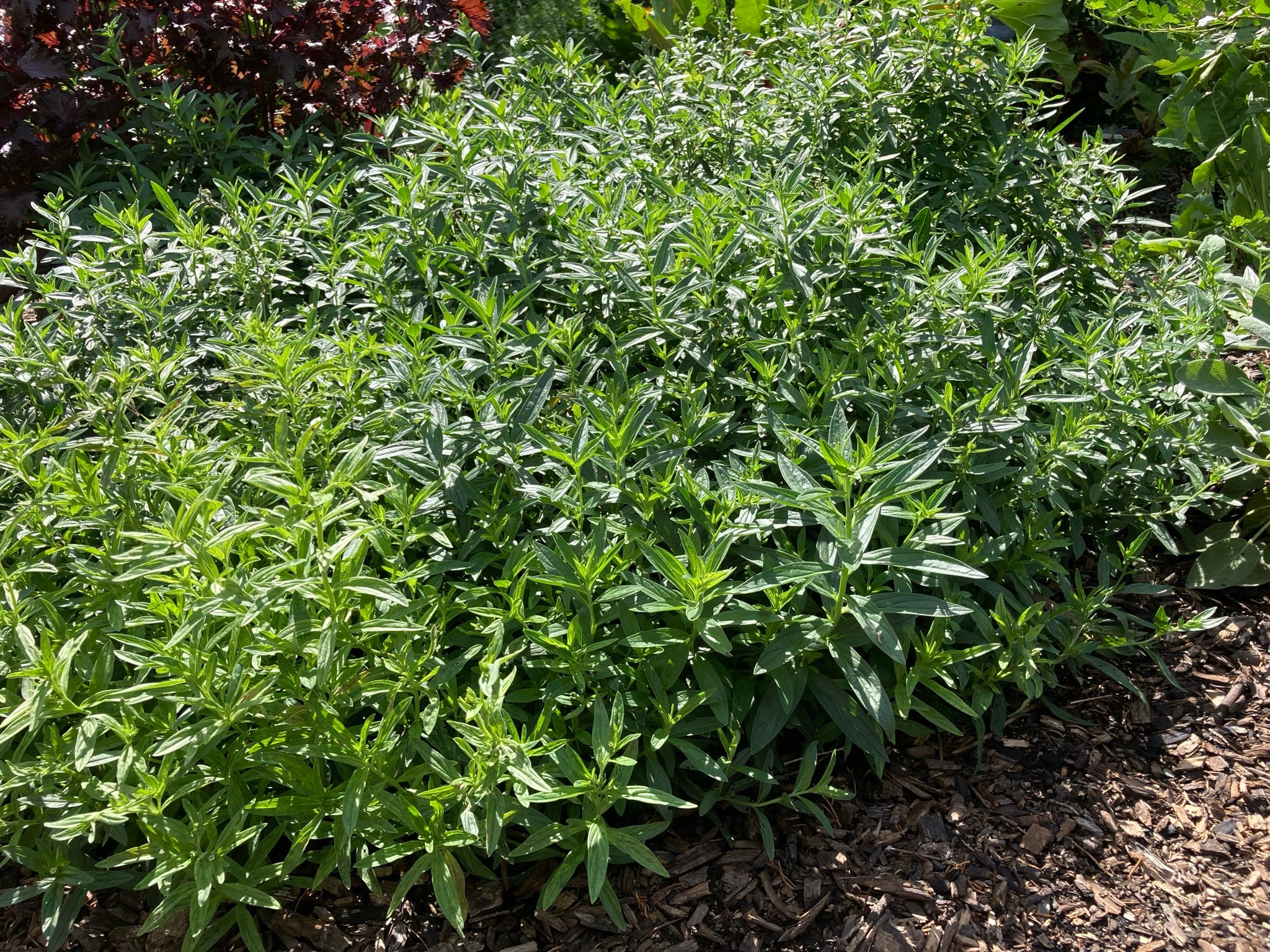 Image 7 of 9
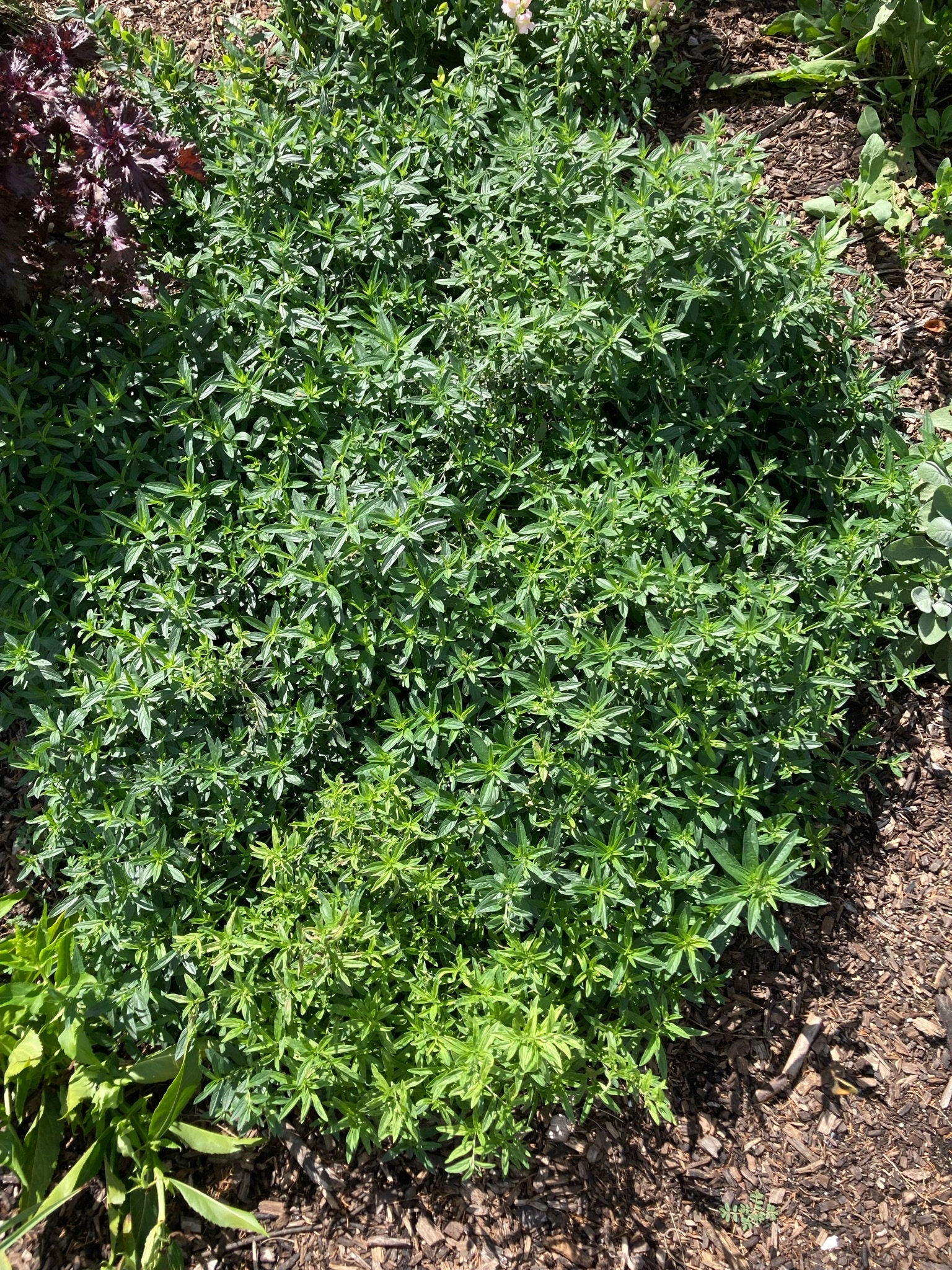 Image 8 of 9
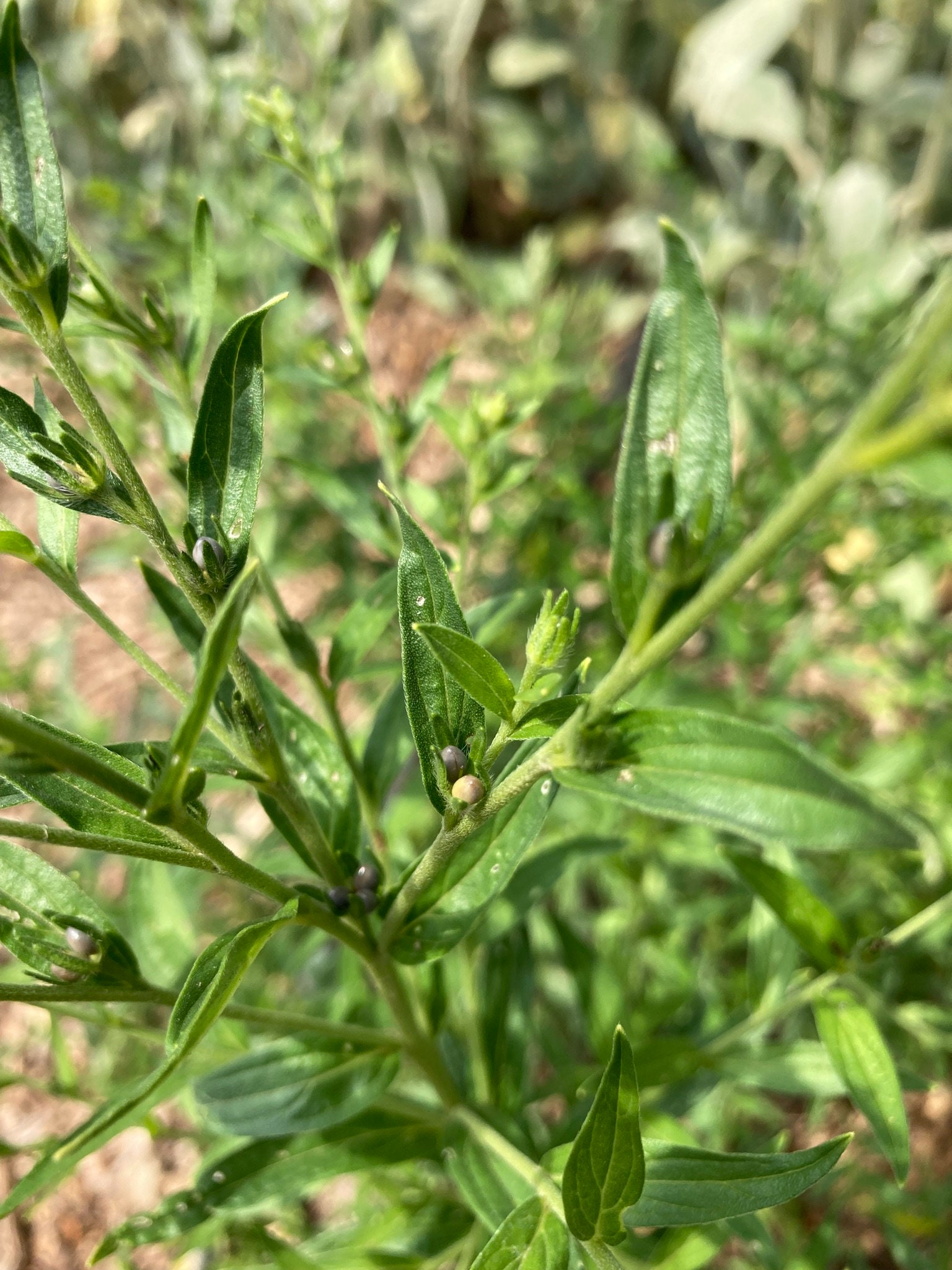 Image 9 of 9