Whole Cochineal Bug Natural Plant Dye for Yarn Protein Dyes Earth Friendly Fiber Wool Silk Mordant Red Pink
from $15.99
Priced and sold by 1, 2, 4 or 8 oz.
These are whole, dried Cochineal bugs. They are a very strong, natural source of red and pink dye. Cochineal can be dyed on wool without using a mordant, and instead putting a tannin source and a bit of acid in the in the pot as you dye the fibers. A mordant is needed to dye cellulose fibers with cochineal.
Cochineal is very pH sensitive. The presence of acid will shift the color towards red, while an alkaline will move the color toward purple.
A true scarlet can be achieved by using tin as a pre-mordant or by adding a small amount of tin (3%) and cream of tartar (6%) to the dye bath.
The color can be shifted toward purple with ammnia or soda ash as a post-dye alkaline pH adjuster, but a more stable purple color results from using a very small amount of iron (less than 1%) as a post-dye bath.
I include a sheet of information about how to immersion dye wool with cochineal.
I ship all my products as quickly as possible.
Priced and sold by 1, 2, 4 or 8 oz.
These are whole, dried Cochineal bugs. They are a very strong, natural source of red and pink dye. Cochineal can be dyed on wool without using a mordant, and instead putting a tannin source and a bit of acid in the in the pot as you dye the fibers. A mordant is needed to dye cellulose fibers with cochineal.
Cochineal is very pH sensitive. The presence of acid will shift the color towards red, while an alkaline will move the color toward purple.
A true scarlet can be achieved by using tin as a pre-mordant or by adding a small amount of tin (3%) and cream of tartar (6%) to the dye bath.
The color can be shifted toward purple with ammnia or soda ash as a post-dye alkaline pH adjuster, but a more stable purple color results from using a very small amount of iron (less than 1%) as a post-dye bath.
I include a sheet of information about how to immersion dye wool with cochineal.

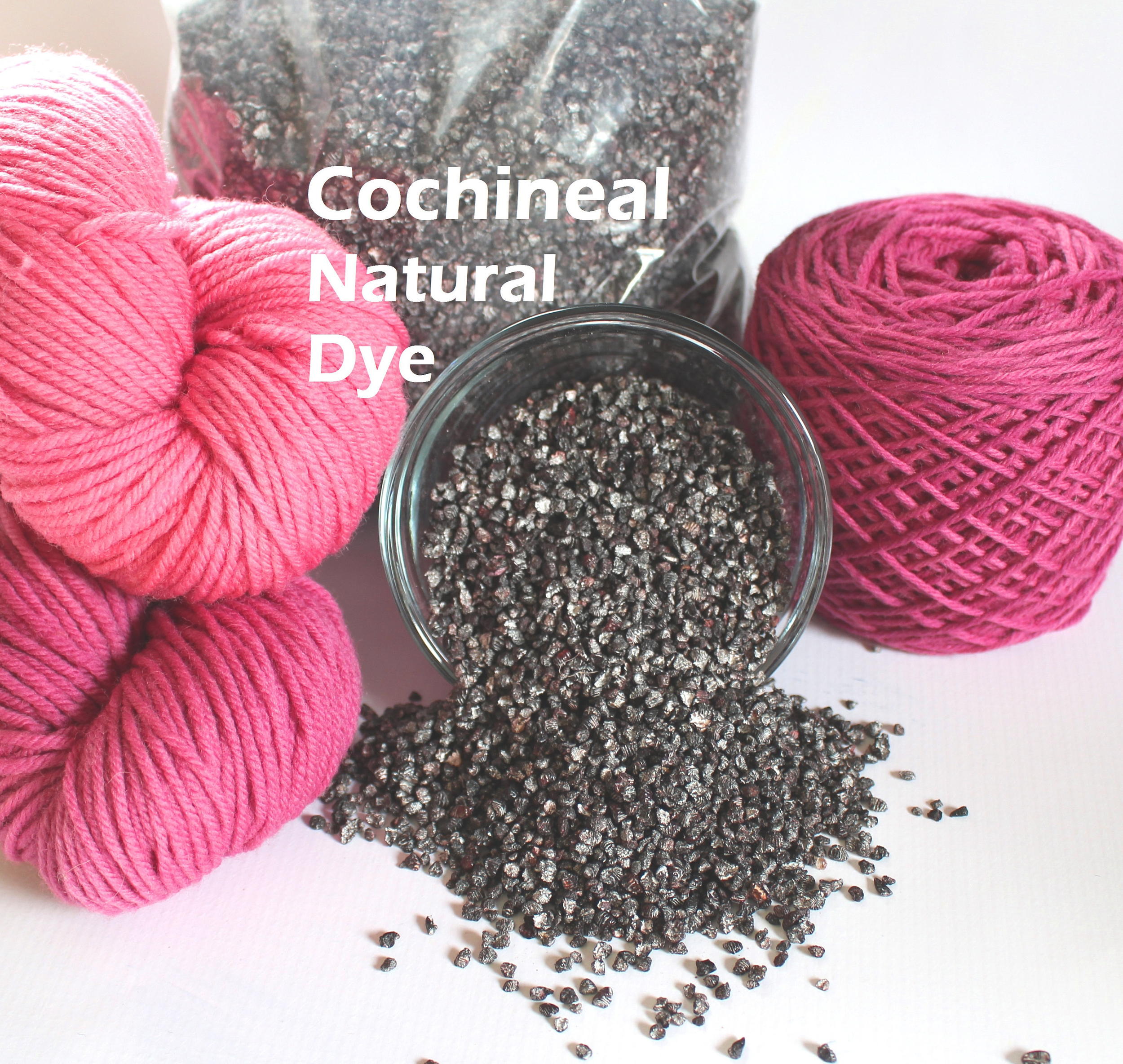 Image 1 of 4
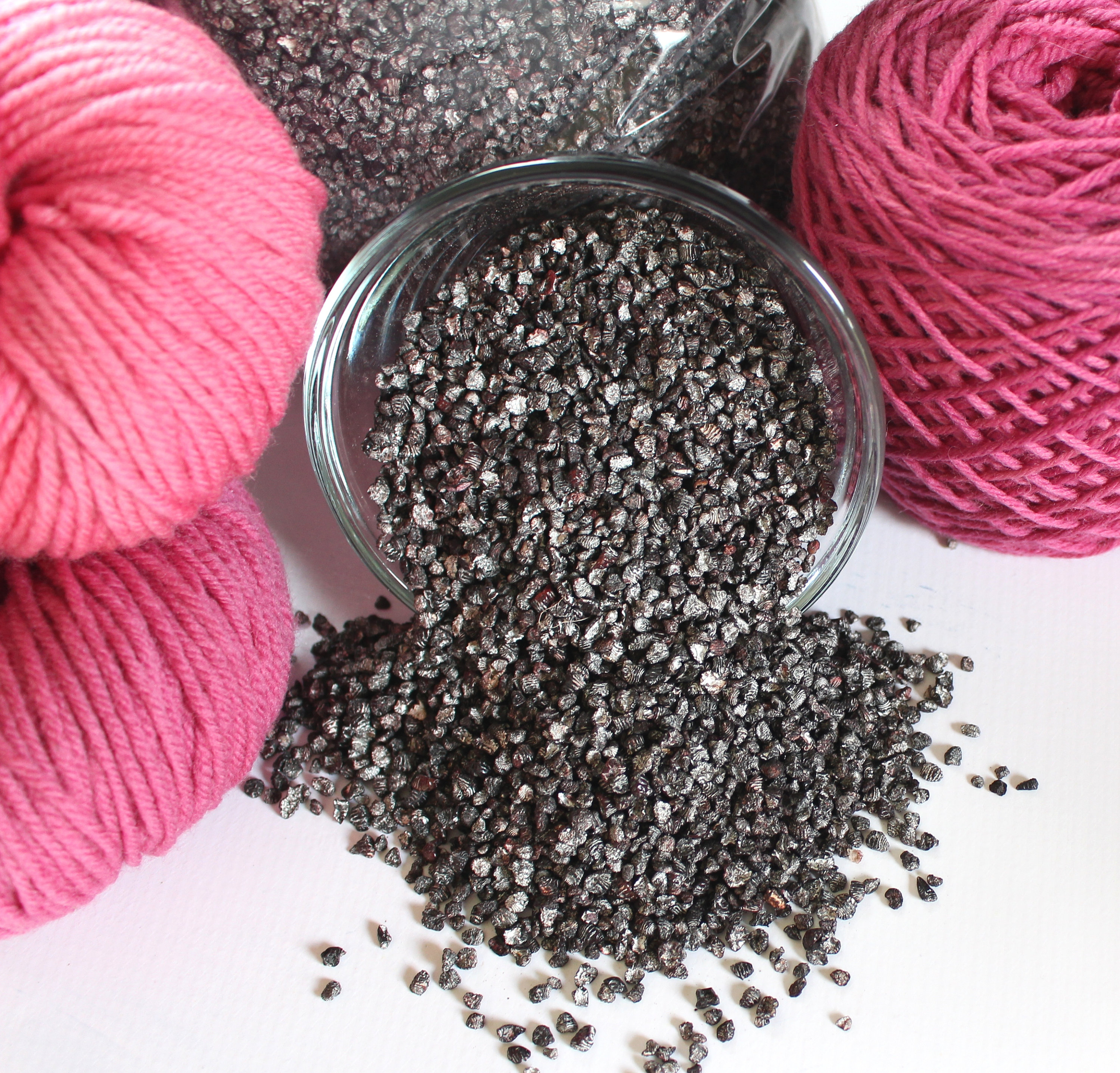 Image 2 of 4
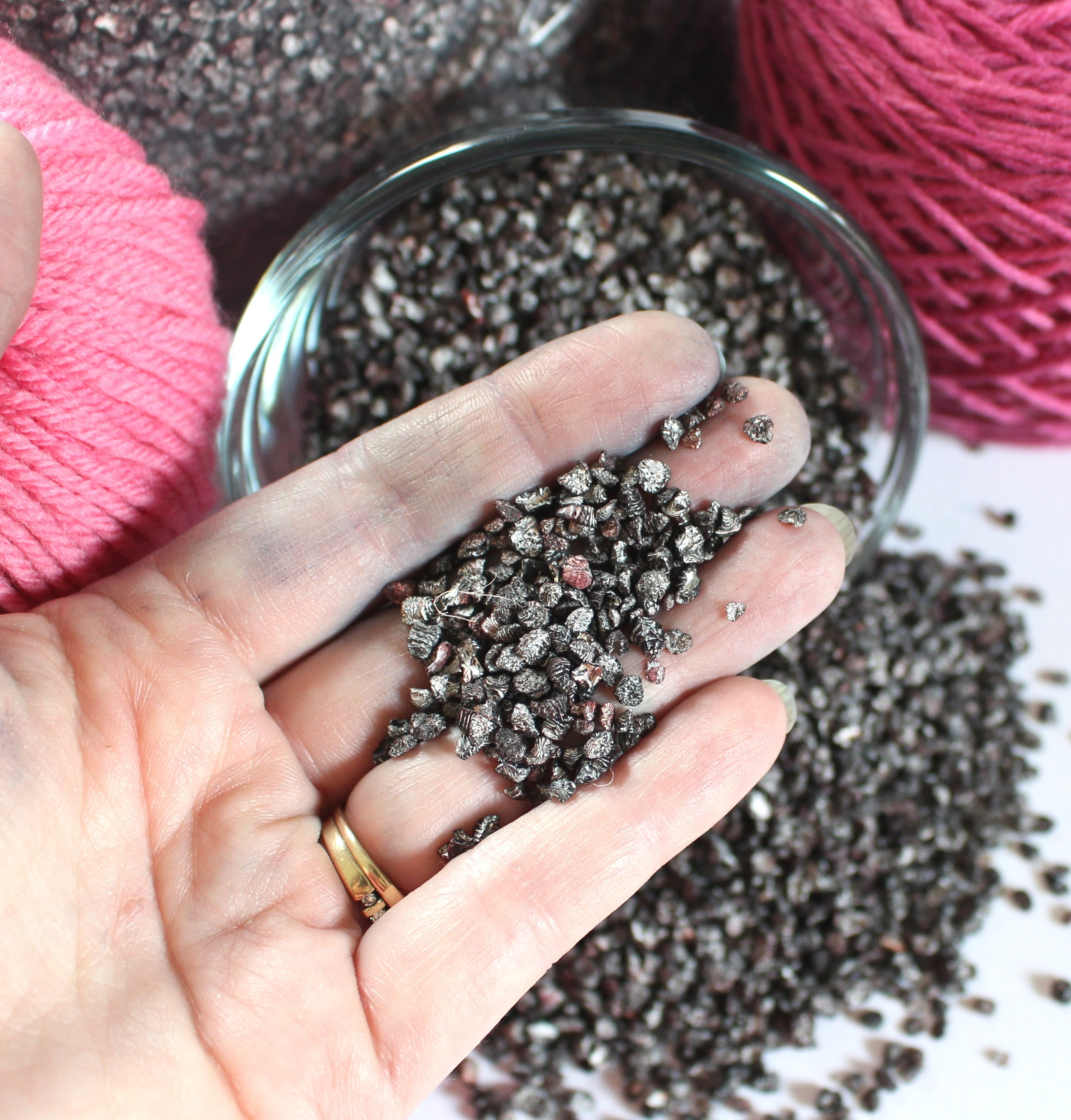 Image 3 of 4
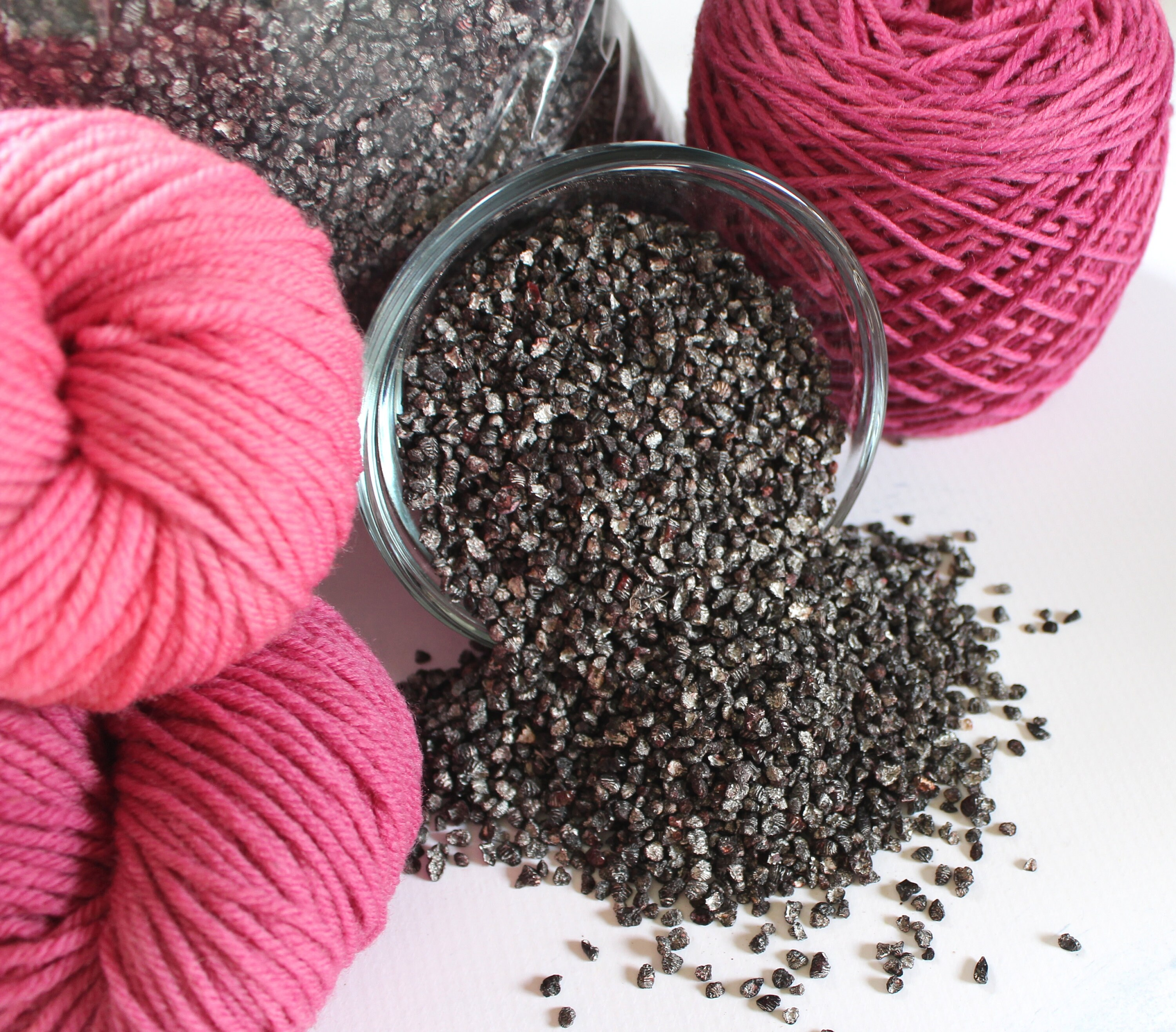 Image 4 of 4